


Route Briefing: Dallas to Dakar
There are routes that feel like they're taking you somewhere genuinely off the beaten path for American travelers, and Dallas to Dakar is absolutely one of them. West Africa remains dramatically underexplored by visitors from the US, which means Dakar still has that electric, unfiltered energy that more heavily touristed cities tend to lose over time. At roughly 16 and a half hours with one stop, it's a serious journey — but the kind that feels earned once you arrive.
Connecting through Paris Charles de Gaulle or Lisbon is your most reliable path, with Air France, Delta, and TAP Air Portugal covering the main options on this route. Lisbon connections via TAP in particular can be surprisingly affordable, and CDG is one of the smoother European hubs for onward West Africa flights. If you can snag a roundtrip under $900, grab it without hesitation — that's genuinely good value for a transatlantic-plus crossing. Standard fares run $1,200 to $1,600 or more, so booking three to six months out is the move here, especially since seats on this corridor fill faster than you'd expect.
Timing matters in Dakar. December through January brings dry, cooler conditions that make exploring the city on foot genuinely pleasant, and the festive season adds a celebratory buzz to the streets. July and August are peak season too, though the heat and humidity are intense — offset by the fact that Dakar's music and cultural scene tends to be particularly alive during this period. Senegal has a deep, internationally celebrated music tradition, and you'll feel it everywhere from neighborhood gatherings to dedicated live venues.
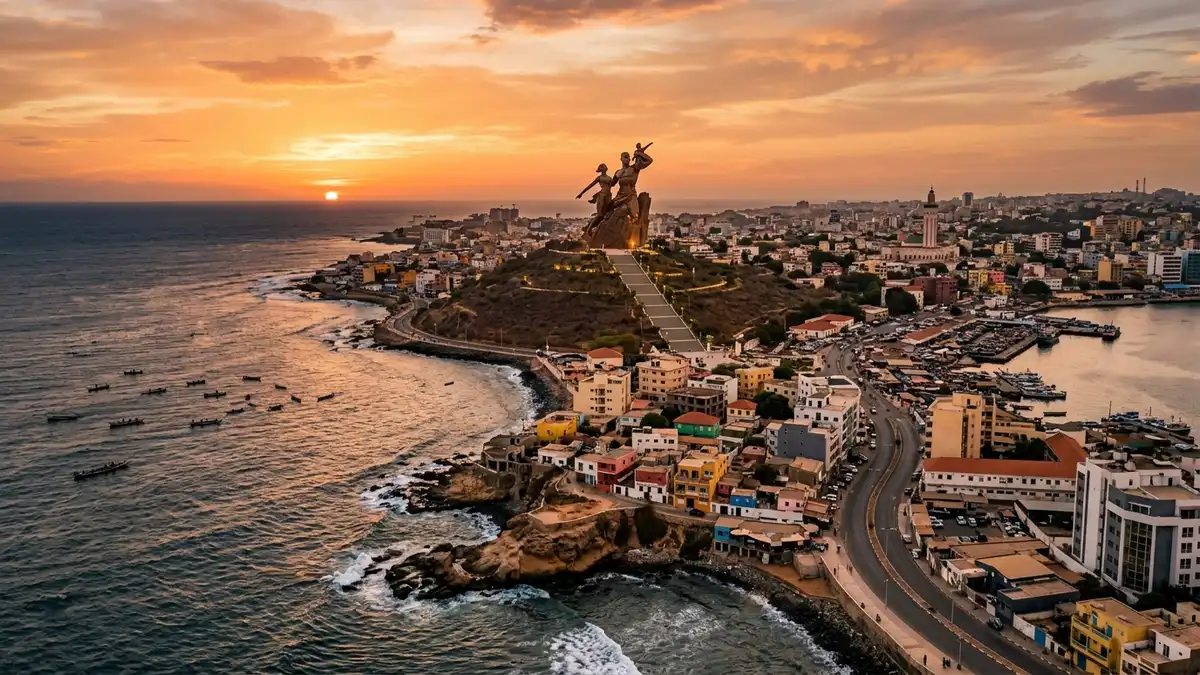
The city itself rewards wandering. The Medina and Sandaga market areas are sensory overload in the best possible way — textiles, street food, the smell of thiéboudienne (Senegal's beloved rice and fish dish) drifting from somewhere nearby. The Île de Gorée, a short ferry ride from the mainland, is one of the most historically significant and quietly moving places in all of West Africa. The Atlantic coastline running through and beyond the city is genuinely beautiful, and the peninsula setting gives Dakar a breezy, open feel that surprises first-time visitors.
Blaise Diagne International Airport sits outside the city, so factor in travel time to reach central Dakar — taxis are the standard option and fares should be agreed upon before you depart. One tip worth taking seriously: learn even a handful of words in Wolof, the dominant local language. Dakar is a welcoming city, but that small gesture of effort opens doors — and smiles — that no amount of money can buy.