


Route Briefing: Denver to Casablanca
Denver to Casablanca is one of those routes that rewards the patient traveler — not a quick hop, but a genuine journey that drops you into one of Africa's most layered, fascinating cities. At around 14 hours and 30 minutes with a stop, you'll want to choose your connection wisely. Routing through Madrid with Iberia or through Paris Charles de Gaulle with Air France tends to offer both competitive pricing and manageable layover times, and Royal Air Maroc flies the route as well, often with a Casablanca connection built right into their network. If you can snag a roundtrip under $700, grab it without hesitation — that's genuinely excellent value for transatlantic travel into Africa. Standard fares climb to $1,000 and well beyond, so booking three to six months ahead is the move that separates the savvy traveler from the one paying full price.
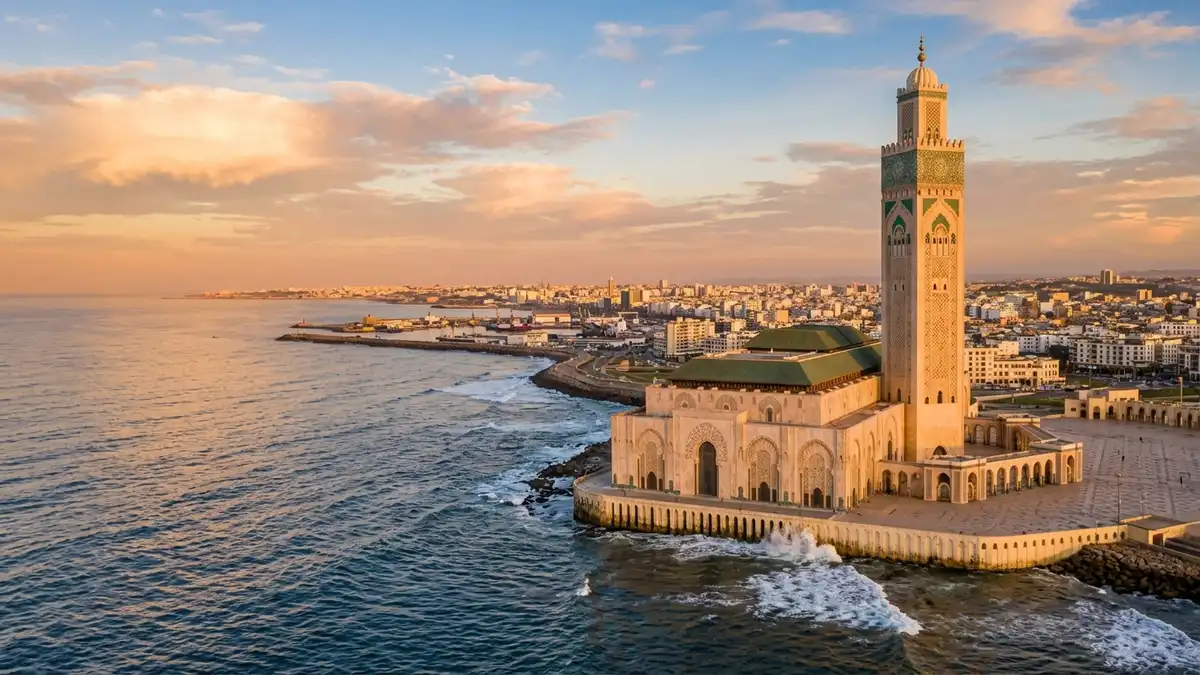
Casablanca itself tends to surprise people. It's not the romantic, sepia-toned city of the film — it's a sprawling, modern metropolis that pulses with commerce, culture, and coastal energy. The Hassan II Mosque is the undisputed centerpiece, one of the largest mosques in the world and one of the very few in Morocco open to non-Muslim visitors on guided tours. Standing at the edge of the Atlantic, with waves crashing beneath its foundations, it's genuinely breathtaking in a way that photographs simply don't capture. Beyond that, the Corniche along the waterfront is perfect for an evening stroll, and the old medina, while smaller than those in Fez or Marrakech, offers an authentic taste of traditional Moroccan market life without the overwhelming tourist crowds.
Moroccan cuisine here is the real deal — tagines slow-cooked with preserved lemon and olives, fresh seafood straight from the Atlantic, and mint tea poured with theatrical flair. Street food is abundant and excellent.
From Mohammed V International Airport, trains connect directly into the city center, making arrival straightforward and affordable — a genuinely convenient option compared to navigating taxis in an unfamiliar city after a long flight.
Timing matters here. June through August is peak season, when the city is busiest and prices for flights and accommodation rise accordingly. If your schedule allows, shoulder seasons in spring or autumn offer pleasant temperatures and thinner crowds. Casablanca's Atlantic position keeps it milder than inland Moroccan cities even in summer, but spring is particularly lovely.
The one tip worth burning into your memory: use Casablanca as your base but build in day trips. Rabat, the capital, is a short train ride away, and the contrast between Morocco's commercial heart and its elegant, quieter capital is worth every minute of that journey.