


Route Briefing: Dubai to Dakar
Few routes connect two worlds quite as dramatically as this one — Dubai's gleaming Gulf skyline giving way, after a connection through Casablanca, Paris, or Istanbul, to the salt-tinged Atlantic air of Dakar. It's a long haul at around thirteen and a half hours of total travel time, but the reward is landing in one of West Africa's most electrifying cities, a place that gets under your skin in ways that are genuinely hard to explain until you've been there.
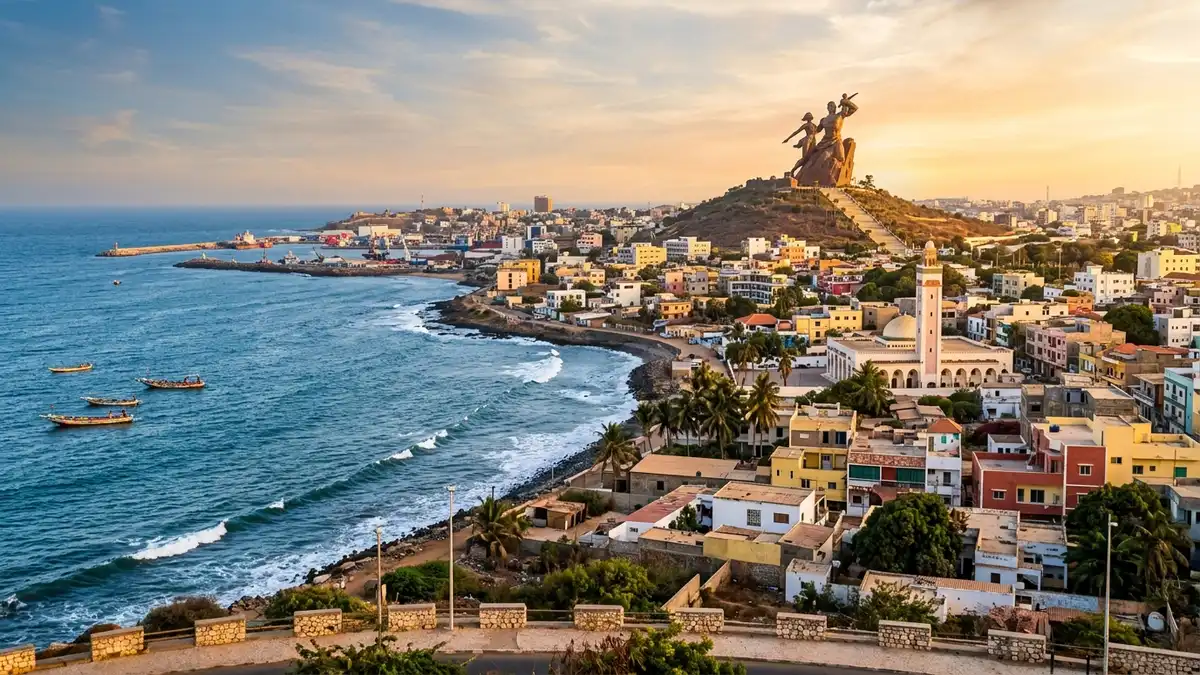
Dakar sits on the westernmost tip of the African continent, jutting boldly into the Atlantic, and that geography shapes everything about it — the cooling sea breeze that makes the climate more forgiving than you'd expect, the fresh seafood that defines the local table, and a certain end-of-the-road energy that makes the city feel both intimate and wildly alive. Senegalese cuisine is widely considered among the finest in West Africa, with dishes like thieboudienne, a richly spiced fish and rice preparation, earning devoted fans well beyond the country's borders. The music scene is equally serious — Dakar has produced some of Africa's most influential artists, and live music is woven into the fabric of daily life here, not something reserved for ticketed venues.
The markets, particularly the sprawling Sandaga and Kermel areas, are sensory overload in the best possible way — textiles, crafts, fresh produce, and the kind of haggling that's more social ritual than transaction. The nearby island of Gorée, a UNESCO World Heritage Site and a profoundly moving piece of Atlantic history, is reachable by a short ferry ride and should not be skipped.
Timing matters on this route. December through January is peak season, when the weather is at its most pleasant and the city hums with festive energy — but fares reflect that demand. If your schedule is flexible, traveling outside those peak months can mean both lower prices and a more relaxed experience. For the best fares, aim to book two to four months ahead, and consider flying midweek rather than on weekends, where modest savings are often available.
Roundtrip fares under $700 represent genuine value on this route — anything above $1,000 is standard territory, so patience in monitoring prices pays off. Royal Air Maroc, Air France, and Turkish Airlines are the reliable carriers here, each routing through their respective hubs.
On arrival at Blaise Diagne International Airport, taxis are the primary option for reaching the city center, and agreeing on a fare before you get in is standard practice and strongly advised. A little French goes a long way in Dakar — alongside Wolof, it's the language of daily commerce and will earn you immediate warmth from locals.