


Route Briefing: Dublin to Casablanca
Just three and a half hours from Dublin and you're stepping into an entirely different world — that's the quiet magic of this route. For Irish travellers, Casablanca represents one of the most accessible gateways into Africa, and with roundtrip fares occasionally dipping below €300, it's a journey that's genuinely hard to talk yourself out of.
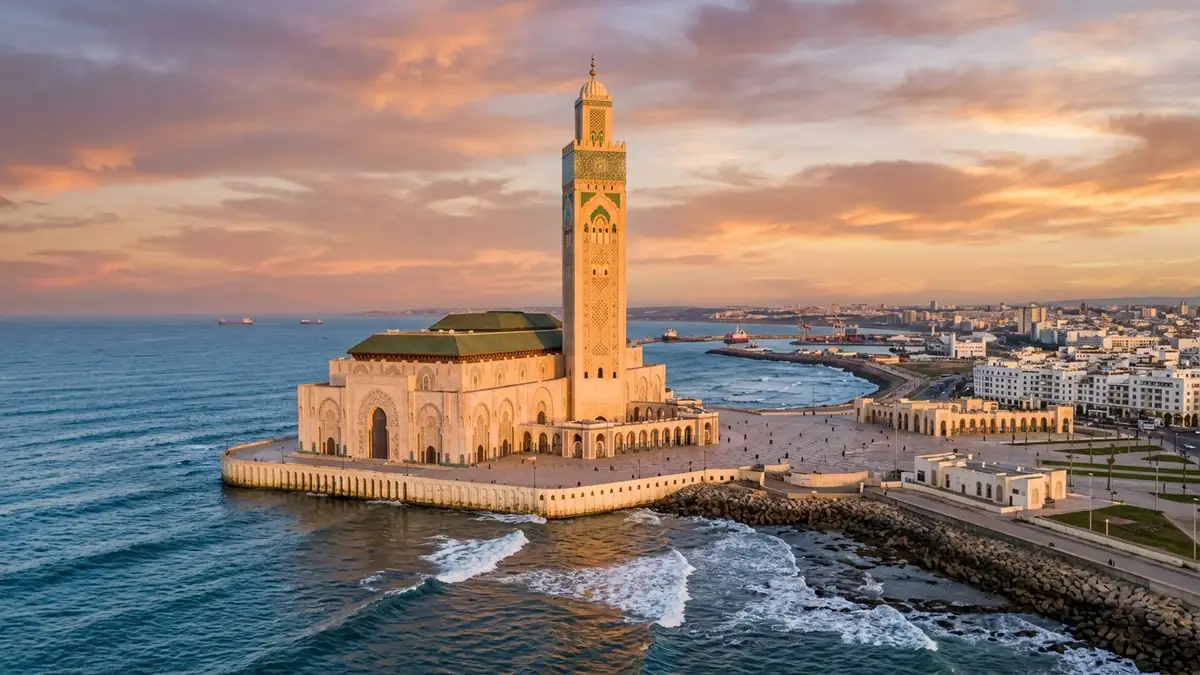
Casablanca isn't the Morocco of romantic desert fantasies — that's Marrakech or Fes — but it has its own compelling identity as a living, breathing metropolis that feels both deeply North African and unmistakably Mediterranean. The city's crown jewel is the Hassan II Mosque, one of the largest mosques in the world and one of the very few in Morocco open to non-Muslim visitors on guided tours. Standing on its oceanside terrace with the Atlantic crashing below is a genuinely humbling experience. Beyond that, the Art Deco architecture scattered through the city centre is a fascinating legacy of the French colonial period, and the Corniche along the waterfront is where locals actually live their evenings — cafés, sea air, and a relaxed energy that surprises most first-timers.
The food scene rewards curiosity. Seek out tagines, harira soup, and fresh seafood in the old medina rather than the tourist-facing restaurants, and you'll eat extraordinarily well for very little money. Moroccan mint tea is practically a ritual — accept every offer.
For getting into the city from Mohammed V International Airport, the train connection is reliable, affordable, and drops you directly into the Casa Voyageurs station in the city centre — a far smarter choice than a taxi for most travellers.
On the airline question, Ryanair typically offers the sharpest base fares on this route, but do the full maths before booking — their baggage fees can close the gap considerably. Royal Air Maroc and Air Arabia Maroc are worth comparing, particularly if you're checking a bag, as included allowances often make the overall cost more competitive than it first appears. Booking six to eight weeks ahead tends to unlock the best pricing across all carriers.
Timing-wise, the route runs year-round, but Casablanca's climate is genuinely pleasant outside the peak summer months of June through August. Spring and autumn offer warm, comfortable temperatures without the crowds or the heat, making them the sweet spot for most visitors. If you do travel in summer, the Atlantic breeze keeps things more bearable than inland Morocco, which is worth remembering.
The single best tip? Use Casablanca as a base rather than just a destination. The train network connects you efficiently to Marrakech, Rabat, and Fes, meaning a week built around this city can quietly become one of the most varied trips you've ever taken.