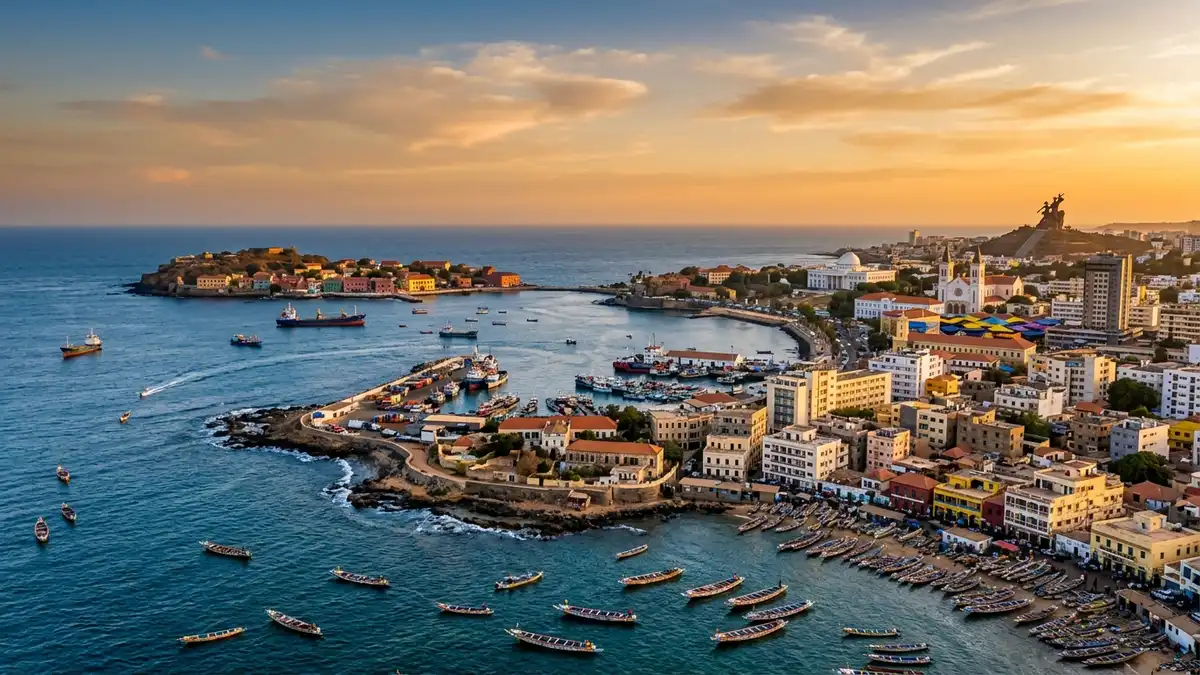



Route Briefing: Dublin to Dakar
There's something quietly thrilling about a route that connects two Atlantic cities sitting on opposite ends of a vast ocean — Dublin's grey, literary cool meeting Dakar's sun-drenched, rhythmically alive energy. This isn't the most obvious long-haul from Ireland, which is precisely what makes it so rewarding for travellers willing to do a little homework on fares.
The journey runs around 13 hours and 30 minutes with a stop, typically routing through Paris or Lisbon depending on whether you fly Air France or TAP Air Portugal — Brussels Airlines is another solid option worth checking. These European hubs are genuinely pleasant layover points, and a well-timed connection through Lisbon in particular can feel like a mini bonus stop. Roundtrip fares under $700 represent a genuinely good deal on this route; standard pricing climbs above $1,000, so the gap between a savvy booking and a last-minute scramble is significant. Book two to four months out, and aim for mid-week departures — that alone can shave 10 to 15 percent off your fare compared to flying on weekends.
Dakar rewards the effort immediately. The city sits on the Cap-Vert peninsula, the westernmost point of the African continent, and that geographic drama sets the tone for everything. The Atlantic is everywhere — in the sea breeze, in the grilled fish served at coastal spots, in the light that makes the city's colours pop. Dakar has one of West Africa's most celebrated music scenes, rooted in mbalax, the percussive, hypnotic genre that Youssou N'Dour helped bring to global ears. Live music is genuinely woven into daily life here, not packaged for tourists.
The markets, particularly Marché Sandaga and the artisan market at Village des Arts, are dense, colourful, and full of textiles, woodwork, and jewellery. Bargaining is expected and good-natured. The nearby island of Gorée, a short ferry ride from the city, carries profound historical weight as a former slave trading post and is a UNESCO World Heritage Site — sobering and essential.
December through January is peak season, when the weather is at its most agreeable — warm, dry, and clear. The rest of the year brings humidity and, from roughly July to September, the rainy season, though even then the city keeps its energy.
From Léopold Sédar Senghor International Airport, taxis into the city centre are the standard option — agree on a price before you get in, as metered fares aren't universal. The drive into central Dakar gives you your first real taste of the city's chaotic, colourful rhythm, and honestly, that's the perfect introduction.