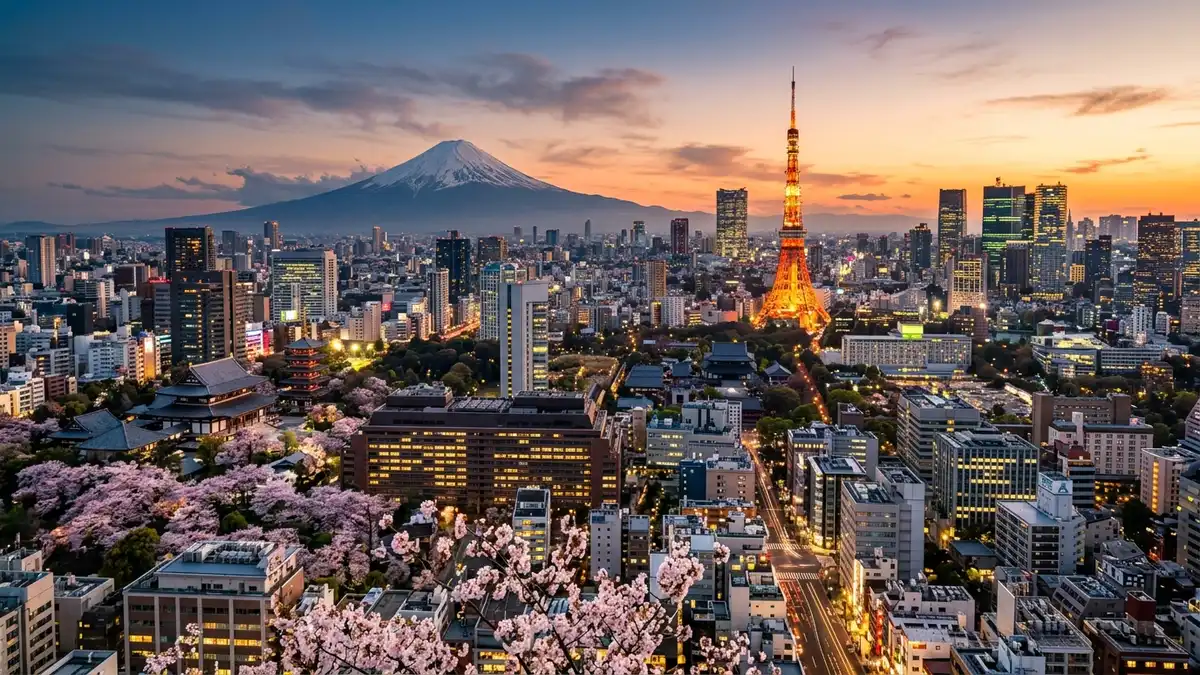



Route Briefing: Dublin to Tokyo
Dublin to Tokyo is one of those routes that feels genuinely transformative — you board in a city of Georgian terraces and Atlantic rain, and roughly thirteen and a half hours later (with one stop), you step into arguably the most extraordinary urban experience on the planet. That journey time, with a connection, is surprisingly manageable, and Finnair's routing through Helsinki is worth a close look — it tends to offer competitive fares and one of the more efficient connection options from Dublin heading east.
On pricing, the gap between a great deal and a standard fare is significant. Snag a roundtrip under $700 and you're doing very well indeed. The typical range sits between $1,000 and $1,400 or more, so timing your search matters enormously. Book three to six months out for the best results, and if cherry blossom season is calling you — that magical late March to April window when Tokyo's parks turn soft pink — start planning even earlier. It's one of the most sought-after travel experiences in Asia, and fares reflect that demand. Summer, from July into August, is the other peak period, lively and festival-rich but humid and busy.
If you want Tokyo at its most atmospheric without the peak-season price tag, consider late autumn. The city turns amber and gold, the crowds thin slightly, and the weather is crisp and walkable — ideal for exploring on foot.
Tokyo itself rewards curiosity at every turn. Ancient Shinto shrines sit minutes from gleaming skyscrapers. Neighbourhoods like Yanaka preserve an older, quieter Tokyo, while Shibuya and Shinjuku deliver the full sensory overload the city is famous for. The food culture alone justifies the flight — Tokyo holds more Michelin stars than any other city in the world, but equally memorable meals are found in tiny ramen counters and basement izakayas where the menu might be entirely in Japanese and the sake is cold.
On arrival at Narita, the Narita Express train connects directly to central Tokyo stations including Shinjuku and Shibuya, making it a straightforward and reliable option to get into the city without navigating unfamiliar bus routes after a long-haul flight. If you land at Haneda, which sits closer to the city centre, access is even more straightforward via rail.
One genuinely useful tip: get a prepaid IC card like a Suica or Pasmo as soon as you arrive. It works across trains, subways, and buses throughout Tokyo, and you can even use it to pay at convenience stores. It removes a surprising amount of friction from daily life in the city and lets you move around with the easy confidence of a local.