


Route Briefing: Las Vegas to Casablanca
Las Vegas to Casablanca is one of those routes that feels genuinely transformative — you board in the neon-soaked Nevada desert and step off into a city where the Atlantic breeze carries the scent of spice markets and the call to prayer echoes across whitewashed rooftops. That contrast alone makes the journey worthwhile, and at under $700 roundtrip when you catch a good deal, it's one of the more rewarding long-haul bargains available from the American Southwest.
The flight runs around 17 and a half hours with one stop, and your best bet is routing through Madrid or Paris. Both cities offer convenient connections, and airlines like Royal Air Maroc, Air France, and Iberia tend to offer the most competitive fares on this corridor. Royal Air Maroc flies directly into its home hub at Casablanca's Mohammed V International Airport, which is well-organized and straightforward to navigate on arrival. From the airport, the train connection into the city centre is reliable, affordable, and far more practical than dealing with traffic in a taxi — it's genuinely one of the smoother airport-to-city rail links on the African continent.
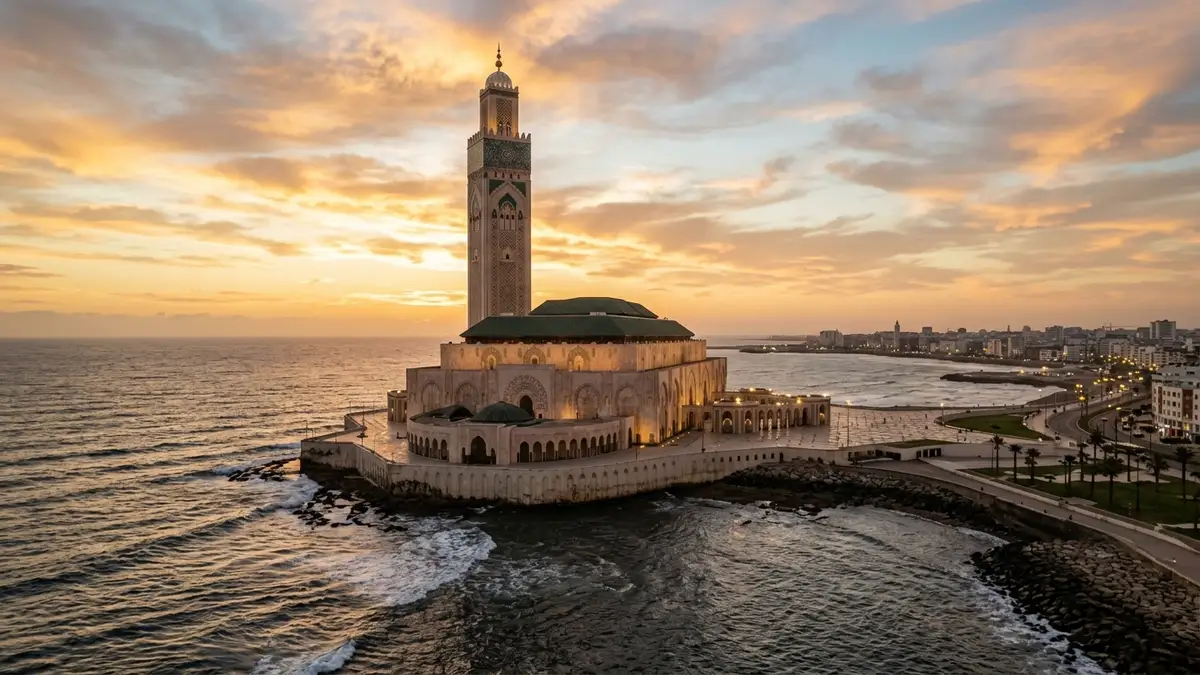
Casablanca itself often surprises first-time visitors. It's Morocco's economic engine rather than its most ancient city, which means it has a cosmopolitan, forward-moving energy alongside its deep cultural roots. The Hassan II Mosque is the undisputed centrepiece — one of the largest mosques in the world, built dramatically over the Atlantic Ocean, and open to non-Muslim visitors during guided tours, which is relatively rare in Morocco. Beyond that, the old Medina, the Art Deco architecture scattered through the downtown streets, and the Corniche waterfront all reward unhurried exploration.
Timing matters on this route. Peak season runs June through August when the Mediterranean summer draws the largest crowds and prices climb accordingly. If your schedule allows, shoulder seasons — particularly spring and early autumn — offer pleasant temperatures, thinner crowds, and more breathing room in the city's souks and cafés. Winters are mild by most standards, making this a genuinely year-round destination.
The single most useful tip for this route: book three to six months ahead and set fare alerts specifically for Madrid and Paris connections. Prices on this corridor fluctuate significantly, and the difference between booking impulsively and booking strategically can easily be several hundred dollars — money far better spent on a hammam session or a day trip to the ancient Roman ruins at Volubilis, a short journey inland and absolutely worth the detour.