


Route Briefing: Las Vegas to Mauritius
Let's be honest — a 22-plus hour journey with multiple stops from Las Vegas isn't something you book on a whim. But Mauritius is exactly the kind of destination that earns every hour in the air, and once you're standing at the edge of a turquoise lagoon with the warm Indian Ocean lapping at your feet, the layover in Dubai or Doha will feel like a distant memory.
From LAS, your best path runs through the Middle East. Emirates connecting via Dubai and Qatar Airways through Doha are the two workhorses of this route, offering solid schedules and — crucially — some of the most comfortable economy cabins on long-haul flying. Air Mauritius also operates services worth checking. Roundtrip fares under $1,400 represent genuine value for this distance, while standard pricing typically lands between $1,800 and $2,500 or more. Given the limited availability on such a niche long-haul route, booking three to six months ahead isn't just a suggestion — it's almost mandatory if you want the better fares and seat selection.
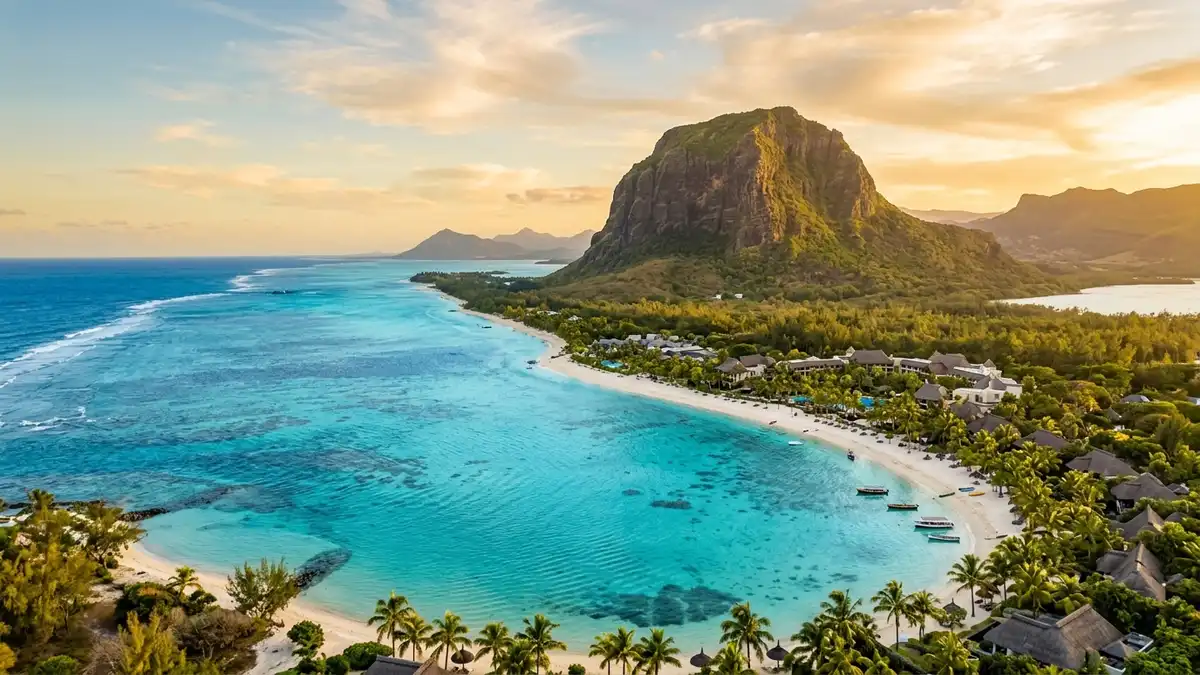
Mauritius sits in the southwestern Indian Ocean, and its appeal goes well beyond the postcard beaches. The island carries centuries of layered history — French, British, and Dutch colonial influences woven together with Indian, African, and Chinese cultural threads — producing a Creole culture that's genuinely fascinating to explore. The food alone reflects this beautifully, with curries, seafood, and street snacks that draw from across the Indian Ocean world. The interior of the island rewards exploration too, with volcanic peaks, tea plantations, and the remarkable Chamarel Coloured Earths geological formation.
Sir Seewoosagur Ramgoolam International Airport sits in the south of the island, and taxis are the most straightforward way to reach your accommodation, though it's worth agreeing on a fare before you set off. The island is compact enough that most resort areas are reachable within an hour.
Timing matters here. July through August and December through January are peak seasons, drawing visitors with reliably warm weather and school holiday crowds — prices reflect that demand. If your schedule allows flexibility, the shoulder months on either side can offer quieter beaches and more breathing room in your budget.
One tip worth keeping in mind: the western and northern coasts tend to stay calmer and sunnier during the cyclone-adjacent months, while the east coast catches more wind. Choosing your base according to the season rather than just the resort brochure can make a real difference to your experience. For a trip this far and this special, that kind of planning pays off.