


Route Briefing: London to Dakar
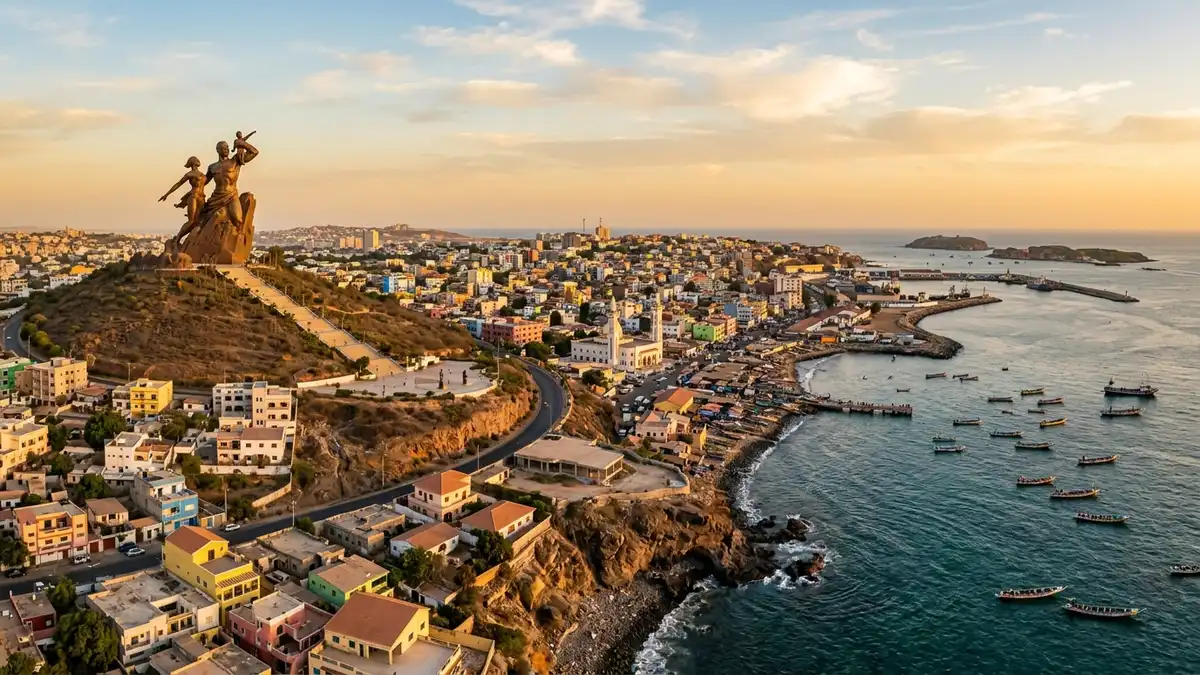
Six and a half hours from London and you're stepping into one of West Africa's most electrifying cities — that's a genuinely remarkable deal for the distance and cultural shift involved. Dakar sits on the westernmost tip of the African continent, jutting out into the Atlantic with an energy that's hard to describe until you've felt it yourself. The city hums with mbalax music, the genre made world-famous by Youssou N'Dour, and you'll hear it drifting from workshops, taxis, and open doorways at almost any hour.
The route is served year-round by Air Senegal, Air France, and Corsair, with direct flights making the journey surprisingly straightforward. If you can snag a roundtrip under $600, you're doing very well — standard fares creep above $900, so timing your booking matters. Aim to lock in tickets two to four months ahead of travel, and if you have flexibility, flying mid-week rather than weekends tends to keep costs down. Avoiding the peak windows of December to January and July to August will also help your wallet considerably, with potential savings of 15 to 25 percent compared to holiday-period pricing.
That said, if budget isn't your primary concern, those peak months bring Dakar to life in spectacular ways. The harmattan winds ease, the city fills with diaspora visitors, and the atmosphere is festive and social. The shoulder seasons offer a quieter, more local experience — still warm, still vibrant, just less crowded.
On arrival at Blaise Diagne International Airport, which replaced the old Léopold Sédar Senghor airport and sits roughly 50 kilometres from the city centre, be prepared for a transfer that takes time. Official taxis are your most reliable option for getting into Dakar, and agreeing on a fare before you get in is standard practice and genuinely expected — don't skip that step.
Once you're in the city, the Plateau district is a good base for first-timers, keeping you close to the waterfront and the main cultural landmarks. The markets, particularly Marché Sandaga and Marché HLM, are essential experiences — the latter is especially famous for its fabrics and tailoring. The island of Gorée, a short ferry ride from the city, is one of the most historically significant sites in all of West Africa and shouldn't be missed.
Dakar's food scene is built around thiéboudienne, a deeply flavoured rice and fish dish considered Senegal's national meal, and you'll find it everywhere from humble neighbourhood spots to proper restaurants. Eat where locals eat and you'll spend very little for something genuinely memorable. That's the spirit of the city, really — generous, colourful, and completely its own thing.