


Route Briefing: Singapore to Tokyo
Few routes in Asia feel quite as rewarding as the Singapore to Tokyo run. You're connecting two of the world's great cities — both obsessively efficient, both deeply proud of their food cultures — and the roughly seven and a half hours in the air feels like a fair trade for what's waiting on the other side. Singapore Airlines, Japan Airlines, and ANA all operate this route, and the quality of service across all three is genuinely excellent, making the journey itself part of the experience rather than something to endure.
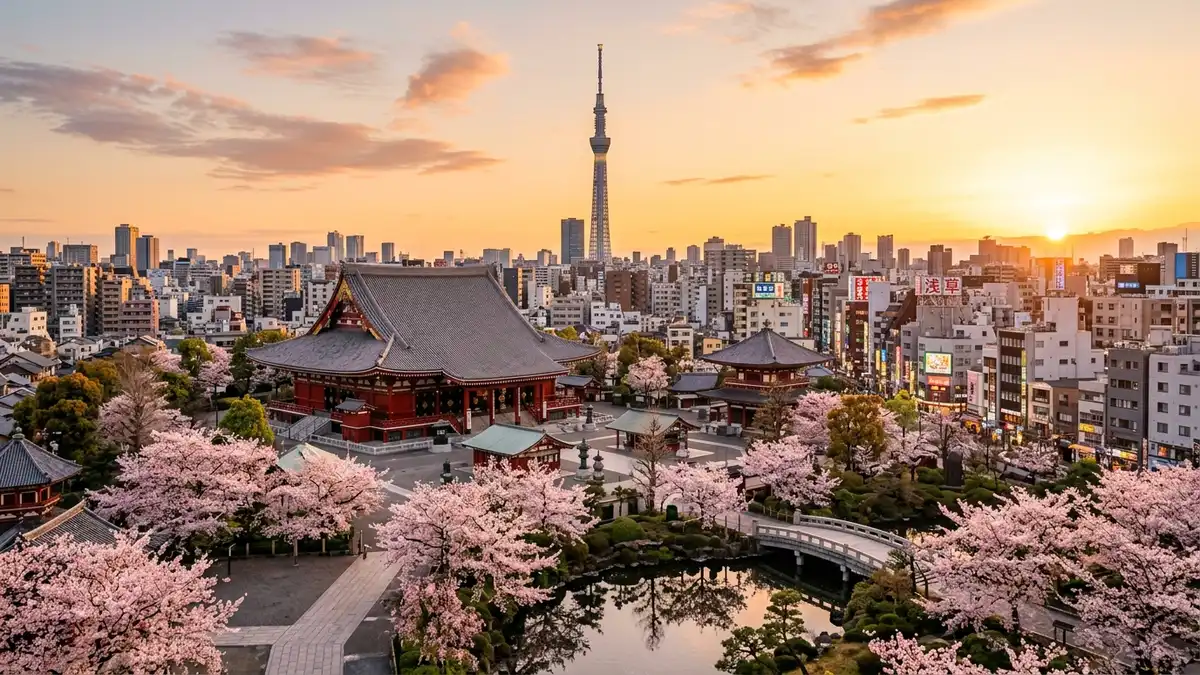
Tokyo is one of those cities that defies easy description. It holds more Michelin-starred restaurants than any other city on earth, yet you can eat extraordinarily well for just a few dollars at a convenience store or a neighbourhood ramen counter. Ancient Shinto shrines sit quietly in the shadows of glass skyscrapers. Districts like Shibuya and Shinjuku pulse with neon energy, while Yanaka and Asakusa offer a slower, more contemplative Tokyo that feels rooted in another era entirely. The city rewards wandering — some of the best moments happen when you simply pick a neighbourhood and walk.
Arriving at Narita, the Narita Express train connects you directly to central Tokyo and is the most straightforward option for most travellers. If you land at Haneda, which sits much closer to the city, you have quick rail and monorail connections that make getting into town genuinely painless.
Timing matters enormously on this route. Cherry blossom season — roughly late March through April — is magical but comes with a significant price premium, both for flights and accommodation. Golden Week, the cluster of Japanese public holidays in late April and early May, sees domestic travel surge and prices spike further. If you want the beauty of spring without the crowds and costs, aim for early to mid-March or wait until May when the blossoms have faded but the weather remains lovely. Autumn, from October through November, is arguably Tokyo's most underrated season — the foliage is stunning, the temperatures are comfortable, and fares tend to be far more reasonable.
On the fare front, a roundtrip under five hundred dollars represents genuine value on this route, while standard pricing sits well above eight hundred. Booking two to four months ahead gives you the best shot at those lower fares. The single most useful tip: pick up an IC card like a Suica or Pasmo at the airport on arrival. It works on virtually every train, subway, and bus in Tokyo, and even at many convenience stores — it will save you time and small frustrations every single day of your trip.