


Route Briefing: Sydney to Tokyo
Sydney to Tokyo is one of the great long-haul routes in the Asia-Pacific, and at just under ten hours direct, it's remarkably manageable for the distance involved. Qantas, Japan Airlines, and ANA all operate this corridor, and the competition between them works in your favour — roundtrip fares under $700 represent genuine value on this route, though standard pricing typically sits between $1,000 and $1,400. Book three to six months ahead and you give yourself the best shot at those lower fares, particularly if you're targeting the cherry blossom window in late March and April, when the entire country seems to hold its breath in collective wonder.
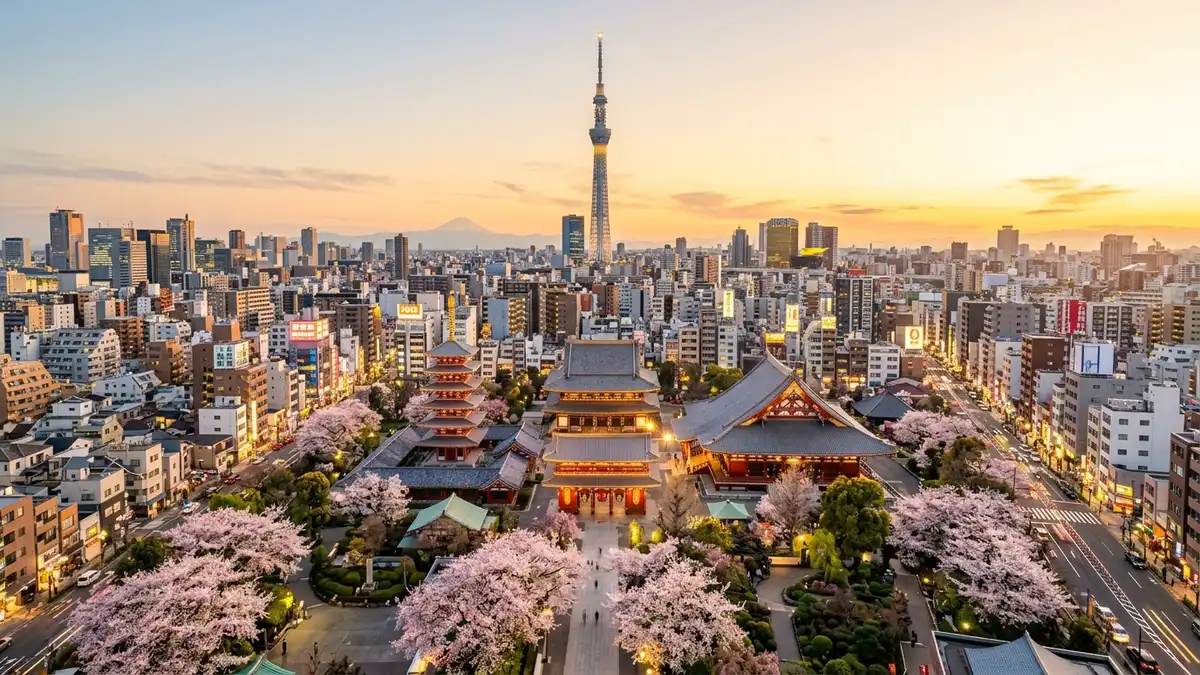
Tokyo is the kind of city that quietly dismantles every assumption you arrive with. It is simultaneously the world's largest metropolis and one of its most orderly, a place where ancient Shinto shrines sit in the shadow of glass towers and a bowl of ramen from a tiny counter restaurant can be as considered and precise as anything you'd find in a fine dining room. The city rewards wandering — neighbourhoods like Yanaka preserve an older, quieter Tokyo, while Shibuya and Shinjuku deliver the full sensory overload the city is famous for. Asakusa's Senso-ji temple is genuinely unmissable, and the teamLab digital art installations offer something you simply cannot experience anywhere else on earth.
From Narita Airport, the Narita Express train connects you directly to central Tokyo stations including Shinjuku and Shibuya, making it a clean and stress-free arrival option. If you're flying into Haneda, which sits much closer to the city, access is even more straightforward via the Tokyo Monorail or direct rail connections.
Timing matters enormously on this route. Late March through early May is magical but expensive and crowded — Golden Week in late April and early May sees domestic travel surge alongside international visitors, so accommodation books out fast. July and August bring summer festivals and fireworks displays but also serious heat and humidity. Autumn, roughly October through November, is arguably the most underrated season: the crowds thin, the temperatures become genuinely pleasant, and the city turns amber and crimson with momiji foliage.
The single best piece of advice for this trip: buy an IC card like Suica or Pasmo on arrival and load it with cash. It works on virtually every train, subway, and bus in Tokyo, and at many convenience stores and vending machines too. It removes the friction of navigating ticket machines in a foreign language and lets you move through the city the way locals do — quickly, efficiently, and without a second thought.