


Route Briefing: Toronto to Dakar
There's something quietly thrilling about a route that connects two of the Atlantic world's great cultural capitals — Toronto's multicultural energy flowing eastward across the ocean to Dakar, one of West Africa's most magnetic cities. At around 14 and a half hours with a single stop, this isn't a quick hop, but the journey rewards patience generously.
Flights connect through European or North African hubs, with Air France routing through Paris, TAP Air Portugal through Lisbon, and Royal Air Maroc through Casablanca. That layover flexibility is actually your biggest financial lever — fares can swing considerably depending on which connecting city you choose, so when you're searching, compare all three carriers rather than locking in on one. A good deal lands under $900 roundtrip, while standard fares sit in the $1,200 to $1,600 range. Book two to four months ahead and you'll give yourself the best shot at the lower end of that spectrum.
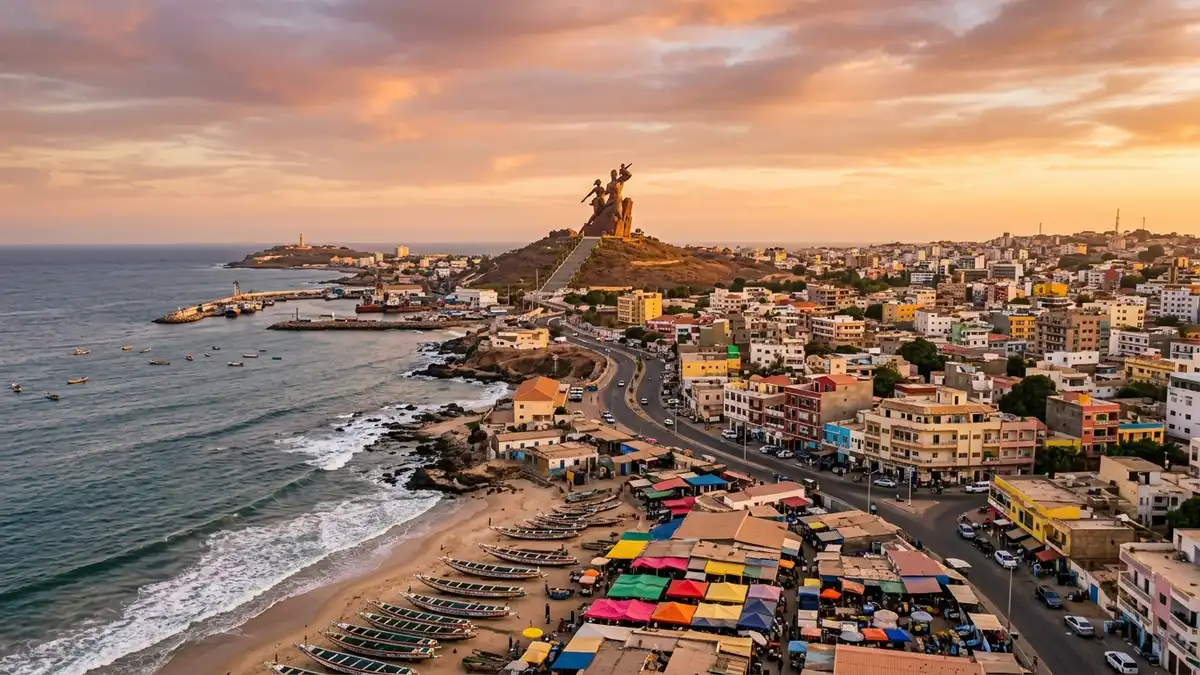
Dakar sits on the westernmost tip of the African continent, jutting into the Atlantic with a confidence that matches its personality. The city pulses with mbalax music — the rhythmic, percussive sound that Senegal gave the world — and you'll hear it drifting from open doorways and market stalls at almost any hour. The markets themselves, particularly around the Sandaga and Kermel areas, are dense with color, craft, and conversation. Gorée Island, a short ferry ride from the mainland, carries a profound and sobering history as a former slave trading post, and a visit there is one of the most emotionally resonant experiences West Africa offers.
The food scene leans heavily on thiéboudienne, a slow-cooked rice and fish dish considered Senegal's national plate, and yassa, a bright, onion-and-lemon marinated chicken or fish preparation that's deeply satisfying. Street food is abundant and affordable.
Timing matters here. December through January brings dry, cooler conditions that make exploring on foot genuinely comfortable, and the festive season adds extra energy to the city. July and August are peak as well, though the humidity climbs considerably during the rainy season months. If you prefer quieter streets and lower accommodation prices, the shoulder months of October through November or February through March offer a sensible middle ground.
One tip worth holding onto: Dakar rewards slow travel. Rather than cramming in day trips immediately, spend your first day simply walking the Plateau neighborhood and letting the city's rhythm find you. The connections you make wandering unhurried will shape the rest of your trip far more than any checklist could.