


Route Briefing: Washington D.C. to Casablanca
There's something quietly thrilling about boarding a flight from the American capital and landing in one of Africa's most storied cities — a place where Art Deco boulevards meet ancient medinas and the Atlantic breeze carries the scent of spices and sea salt. The Washington D.C. to Casablanca route is one of those transatlantic journeys that genuinely rewards the traveler willing to make the crossing, and at under $700 roundtrip, it can be a remarkable value for a destination that feels worlds away from anything familiar.
The flight runs around ten and a half hours with one stop, and your choice of airline shapes the experience meaningfully. Royal Air Maroc frequently offers the most competitive fares and routes you through their Casablanca hub, which means you arrive having already been immersed in Moroccan hospitality at 35,000 feet. Air France and Iberia are solid alternatives connecting through Paris and Madrid respectively — useful if you want to tack on a European stopover. Book two to four months ahead and you'll be in the best position to catch those sub-$700 fares before they climb toward the $900-plus standard range.
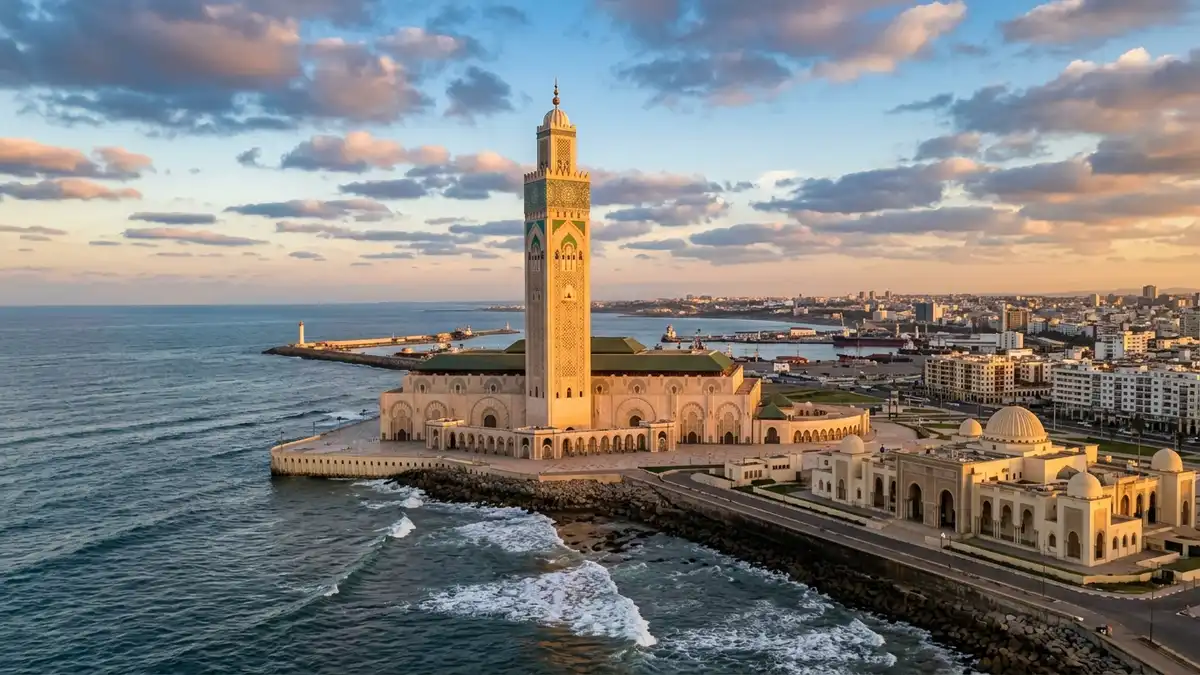
Casablanca itself is often misunderstood by first-timers expecting a romantic film-set fantasy. What you actually find is Morocco's beating commercial heart — a sprawling, confident city that blends French colonial architecture with modern ambition and deep Islamic tradition. The Hassan II Mosque is genuinely one of the most breathtaking structures on earth, its minaret soaring above the Atlantic coastline and its prayer hall partially built over the ocean. Even if you visit no other landmark, that alone justifies the journey. The old medina is smaller and less overwhelming than Fez or Marrakech, which makes it a wonderful introduction to Moroccan street life — the souks, the street food, the call to prayer echoing between whitewashed walls.
From Mohammed V International Airport, trains connect directly to the city center, making arrival straightforward and affordable without the hassle of negotiating taxis after a long flight. It's one of the more seamless airport-to-city connections in Africa.
Timing matters here. June through August is peak season, bringing crowds and higher prices. If you can travel in spring — particularly April and May — you'll find pleasant temperatures, fewer tourists, and the city at its most photogenic. The shoulder season also opens the door to day trips: Rabat is just over an hour away by train, and Marrakech is reachable by high-speed rail, making Casablanca an ideal base for exploring the broader country. That train network is genuinely the savvy traveler's secret weapon — fast, affordable, and far more comfortable than you might expect.