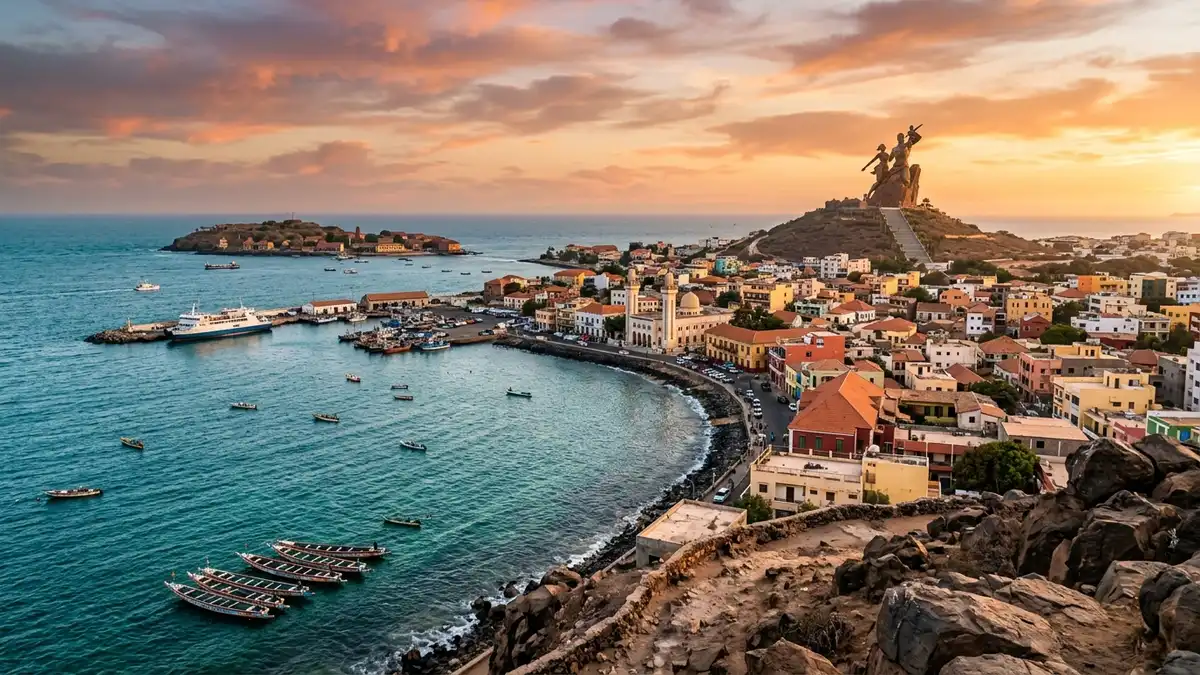



Route Briefing: Washington D.C. to Dakar
There's something quietly thrilling about a direct transatlantic connection between the American capital and one of West Africa's most dynamic cities, and this route delivers exactly that sense of purposeful adventure. Washington to Dakar is a journey that rewards the curious traveler — someone who wants to experience a city that feels genuinely alive rather than polished for tourism.
Dakar sits on the westernmost tip of the African continent, jutting into the Atlantic with an energy that's hard to describe until you're standing in the middle of it. The city is a sensory experience from the moment you land — the smell of thiéboudienne, Senegal's beloved rice and fish dish, drifting from neighborhood restaurants, the sound of mbalax music pulsing from open doorways, and the extraordinary color of the markets. The Sandaga and Kermel markets are worth entire afternoons of wandering, and the Île de Gorée, a short ferry ride from the mainland, offers one of the most historically significant and quietly moving experiences in all of West Africa. The island's colonial architecture and the House of Slaves stand as sobering reminders of the transatlantic slave trade — a particularly resonant visit for travelers coming from Washington D.C.
The flight itself runs around thirteen and a half hours with a stop, and Air France routing through Paris CDG is consistently one of the strongest options both for price and connection reliability. Delta and Brussels Airlines also serve this corridor well. A good roundtrip fare comes in under $700 — genuinely excellent value for a transatlantic journey of this distance — while standard pricing typically runs between $1,000 and $1,400 or more. Book two to four months ahead and you'll have the best shot at those lower fares, since last-minute availability on this route tends to get expensive quickly.
Timing matters here. December through January brings dry, cooler weather and festive energy, making it one of the most comfortable periods to visit. July and August are peak season too, though the heat and humidity are more intense — the trade-off is a city buzzing with Senegalese diaspora returning home, which gives the atmosphere a particular warmth and vibrancy. If you prefer quieter streets and lower prices, the shoulder months on either side of these peaks are worth considering.
On arrival at Blaise Diagne International Airport, taxis and car hire services are available to reach the city center, though it's worth agreeing on a fare before you set off. One genuinely useful tip: bring some French alongside your curiosity, since Dakar is a francophone city at its core, and even basic phrases go a long way toward opening doors — and getting a better price at the market.