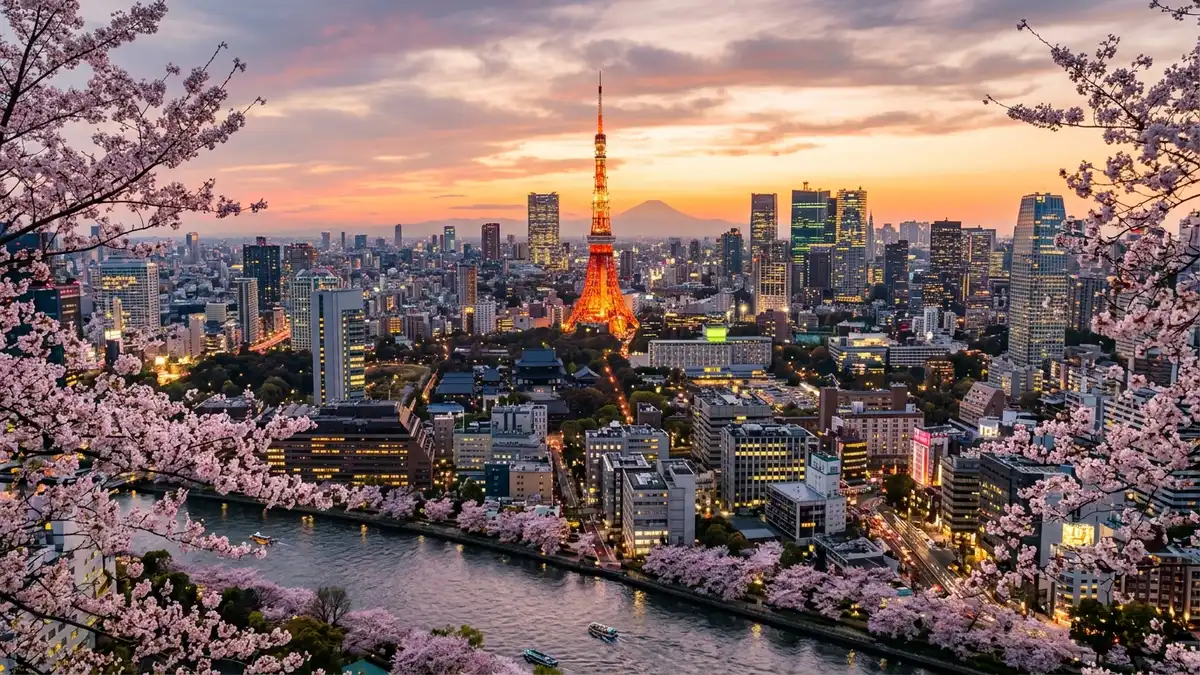



Route Briefing: Washington D.C. to Tokyo
There are long-haul flights, and then there's Washington D.C. to Tokyo — a journey that deposits you into what many seasoned travelers consider the single most extraordinary city on earth. The roughly 13-and-a-half-hour flight, typically with one stop, is the kind of trip worth planning carefully, because Tokyo rewards the prepared visitor in ways few destinations can match.
On the fare side, anything under $700 roundtrip is genuinely excellent value for this route — grab it without hesitation. Standard pricing runs $1,000 to $1,400 or more, so the savings are real. ANA and JAL are the prestige choices here, both consistently praised for their service quality and in-flight comfort on long Pacific crossings. United also operates this route and frequently offers competitive pricing. A smart move: check connections through Chicago O'Hare or San Francisco rather than routing through East Coast hubs, as those western gateways tend to surface lower fares. Book three to five months out, especially if you're eyeing spring travel.
And spring is the reason many people make this trip in the first place. Late March through April is cherry blossom season, when Tokyo's parks — particularly Shinjuku Gyoen and Ueno Park — transform into something genuinely dreamlike. It's also the busiest and most expensive window, so early booking isn't optional, it's essential. Summer brings festivals and energy but also heat and humidity. Winter is quieter, often cheaper, and Tokyo's illuminations make the city feel magical in a completely different way.
Tokyo itself operates on a scale that's hard to prepare for. It's a city of neighborhoods, each with its own distinct personality — the electric chaos of Shibuya, the traditional temples of Asakusa, the refined calm of Yanaka, the pop-culture frenzy of Akihabara. The food scene alone justifies the flight: Tokyo holds more Michelin stars than any other city in the world, but some of the most memorable meals come from tiny ramen shops, conveyor-belt sushi counters, and standing soba bars where a full lunch costs next to nothing.
Arriving at Narita (NRT), the Narita Express train connects directly to central Tokyo stations and is the most straightforward option for most visitors. Haneda (HND) is closer to the city center and well-served by both rail and monorail connections.
One tip that genuinely changes the experience: pick up an IC card like a Suica or Pasmo at the airport. It works on virtually every train, subway, and bus in Tokyo, and even at many convenience stores. Tokyo's public transit is famously punctual and comprehensive — once you're loaded up, the entire city opens up effortlessly.