


Route Briefing: Atlanta to Busan
Getting from Atlanta to Busan is a serious journey — around 17 and a half hours with a connection — but the moment you arrive in Korea's second city, you'll understand immediately why it's worth every minute in the air. This isn't Seoul. Busan has its own distinct personality: salt air, fishing boats, mountains tumbling straight into the sea, and a pace that feels more relaxed without sacrificing any of the energy that makes South Korea so addictive to visit.
Korean Air and Asiana Airlines are your best bets on this route, with connections typically routing through Seoul's Incheon Airport. Both carriers are consistently well-regarded for long-haul comfort, and their natural familiarity with the Seoul-to-Busan leg means smoother onward connections. Delta also operates on this corridor. A genuinely good deal lands under $700 roundtrip — standard fares climb to $1,000 or well beyond, so the savings are real if you're patient. Book three to six months out and check fares regularly, as prices on transpacific routes can shift significantly.
Timing matters here. July and August bring summer crowds to Haeundae Beach, one of the most famous stretches of sand in all of Korea — it's spectacular but genuinely packed. If you want the beach without the shoulder-to-shoulder experience, late spring or early autumn gives you warmth, manageable crowds, and some of the most beautiful light you'll find anywhere in East Asia. The late December to early January window is peak season again, so expect higher fares if you're planning a winter trip.
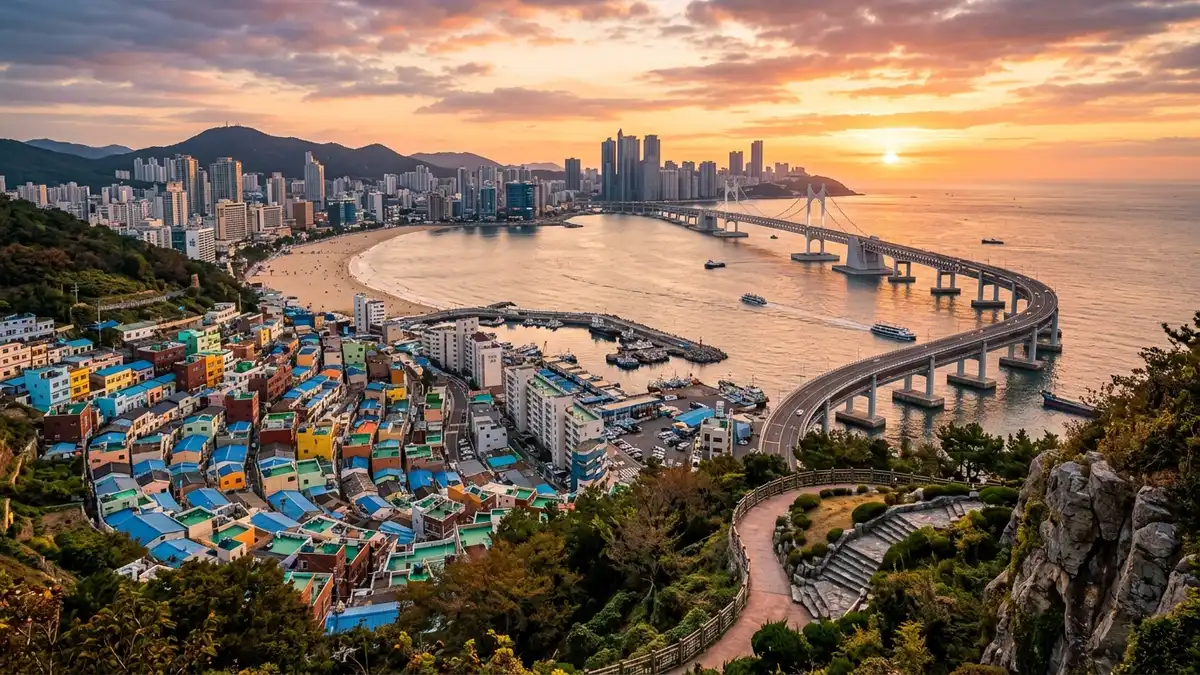
Busan's highlights are wonderfully varied. The Jagalchi Fish Market is a must — it's one of the largest seafood markets in Korea, lively from early morning, and the freshest raw fish you'll eat anywhere. Gamcheon Culture Village, with its stacked pastel houses climbing the hillside, is as photogenic as anywhere in the country. Haedong Yonggungsa Temple sits dramatically on coastal cliffs and feels unlike any temple experience you'll find inland. The city's food scene leans heavily on seafood and spice, and eating well here is remarkably affordable.
From Gimhae International Airport, the city is easily accessible by light rail connecting to Busan's subway network — a practical, inexpensive option that drops you into the heart of the city without the unpredictability of traffic. One tip worth taking seriously: if your connection routes through Incheon, build in enough layover time. Incheon is a world-class airport with plenty to keep you comfortable, but transpacific flights can arrive with delays, and a tight connection to Busan is a stress you don't need after seventeen-plus hours in the air.