


Route Briefing: Boston to Kyoto
There are flights, and then there are flights that feel like they're carrying you toward something genuinely transformative. Boston to Kyoto is firmly in the second category. You're looking at roughly 14 and a half hours in the air with one stop — most commonly routing through Tokyo or the Osaka area — and the carriers doing this route well include Japan Airlines, ANA, and United. JAL and ANA in particular are consistently praised for their service quality, which makes a long-haul journey considerably more bearable.
Flying into Kansai International Airport is the smart play here. KIX sits closer to Kyoto than Tokyo's airports do, saving you a significant chunk of overland travel time, and fares into KIX are often more competitive than routing through Tokyo. From Kansai, the Haruka Express train connects directly to Kyoto Station in under an hour — it's comfortable, reliable, and takes the guesswork out of arrival day entirely.
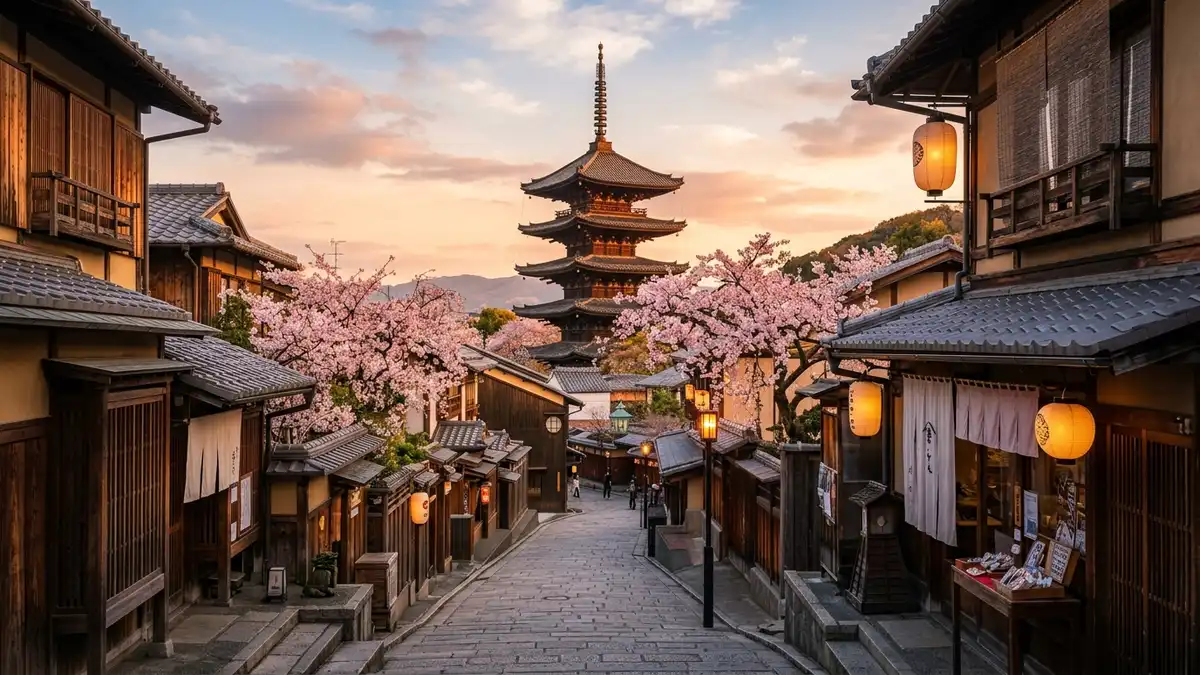
Now, about Kyoto itself. This city carries the weight of Japanese history in the most beautiful way imaginable. Over two thousand temples and shrines are scattered across the city and surrounding hills, from the iconic vermillion torii gates of Fushimi Inari to the serene rock gardens of Ryoanji. The Arashiyama bamboo grove is one of those rare places that actually lives up to its photographs. The Gion district, Kyoto's famous geisha quarter, rewards slow evening walks — the wooden machiya townhouses and the occasional glimpse of a maiko heading to an appointment feel genuinely cinematic.
Timing matters enormously here. March through April brings cherry blossom season, when Kyoto becomes arguably the most beautiful city on earth — and one of the busiest. Book flights and accommodation three to five months ahead minimum if you're targeting this window, and expect to pay closer to the standard fare range of $1,000 to $1,400 or more. The same advance booking advice applies to October and November, when the maple foliage turns the temple grounds into something extraordinary. If you catch a roundtrip fare under $700, that's a genuinely good deal and worth snapping up quickly.
The one tip that separates savvy visitors from overwhelmed ones: get a Suica or ICOCA card at the airport on arrival. These rechargeable IC cards work on trains and buses across the city and region, eliminating the need to buy individual tickets every time you move. It's a small thing that makes navigating Kyoto's excellent public transit feel effortless from day one.