


Route Briefing: San Francisco to Kyoto
There are few flights from the Bay Area that feel quite as transformative as the one to Kyoto. You leave one of the world's great modern cities and arrive, roughly twelve and a half hours later, in a place where Buddhist temples outnumber convenience stores and the past feels genuinely present rather than performed. The connection typically routes through Tokyo or Osaka, and while that adds a stop, flying into Kansai International Airport near Osaka is actually your best move — it puts you closer to Kyoto than any other major airport in Japan, and fares through KIX tend to be competitive. Japan Airlines and ANA both run excellent service on this corridor, with United offering another solid option if you want to leverage domestic frequent flyer miles.
From Kansai International, the Haruka Express train runs directly to Kyoto Station, making the transfer genuinely painless — no need to wrestle luggage through a complicated connection. Kyoto Station itself is a gateway into the city's rhythm, and from there the subway and bus network can get you almost anywhere you want to go.
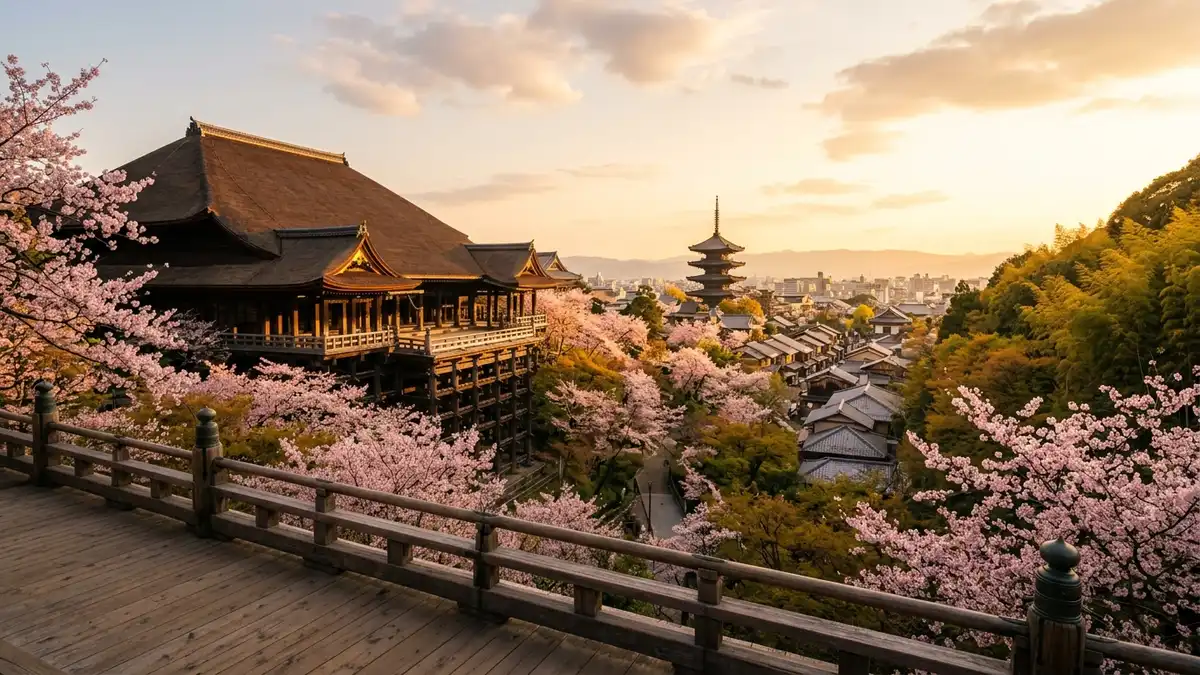
Timing matters enormously here. Late March through early May brings cherry blossom season, arguably one of the most beautiful natural spectacles on earth, but also the most crowded and expensive period to visit. Book three to five months ahead if that's your window, and expect fares to climb well above the standard range. Fall foliage in October and November runs a close second for beauty, with the maple trees around the city's hillside temples turning deep crimson and gold. If you want Kyoto at its most atmospheric without the peak-season crowds, the quieter winter months offer a different kind of magic — misty mornings in Arashiyama's bamboo grove, fewer tourists at Fushimi Inari's thousands of torii gates.
A roundtrip fare under $700 is genuinely a good deal on this route, with standard pricing typically landing between $900 and $1,200 or more. The single best tip for stretching your budget once you arrive: buy a prepaid IC card like a Suica or ICOCA at the airport. It works on trains, buses, and even at many convenience stores across the Kansai region, saving you the friction of buying individual tickets every time you move around the city. Kyoto rewards slow, exploratory travel — the kind where you wander into a neighborhood temple on a Tuesday morning and have the stone garden entirely to yourself.