


Route Briefing: New York to Kyoto
There are few flights that feel like a genuine portal to another world, but the journey from New York to Kyoto is exactly that. Roughly fourteen and a half hours in the air, typically connecting through Tokyo or Osaka, and you step off the plane into Japan's ancient capital — a city where Buddhist temples outnumber convenience stores and centuries-old traditions sit comfortably alongside modern life. That contrast alone makes every hour of travel worthwhile.
Flying into Osaka's Kansai International Airport is your smartest move here. KIX sits closest to Kyoto, and the connection into the city is genuinely one of the smoothest airport-to-destination transfers you'll find anywhere in the world. The Haruka Express train runs directly from KIX to Kyoto Station in around 75 minutes, and it's comfortable, punctual, and easy to navigate even with luggage and jet lag. Once you're at Kyoto Station, the city opens up around you.
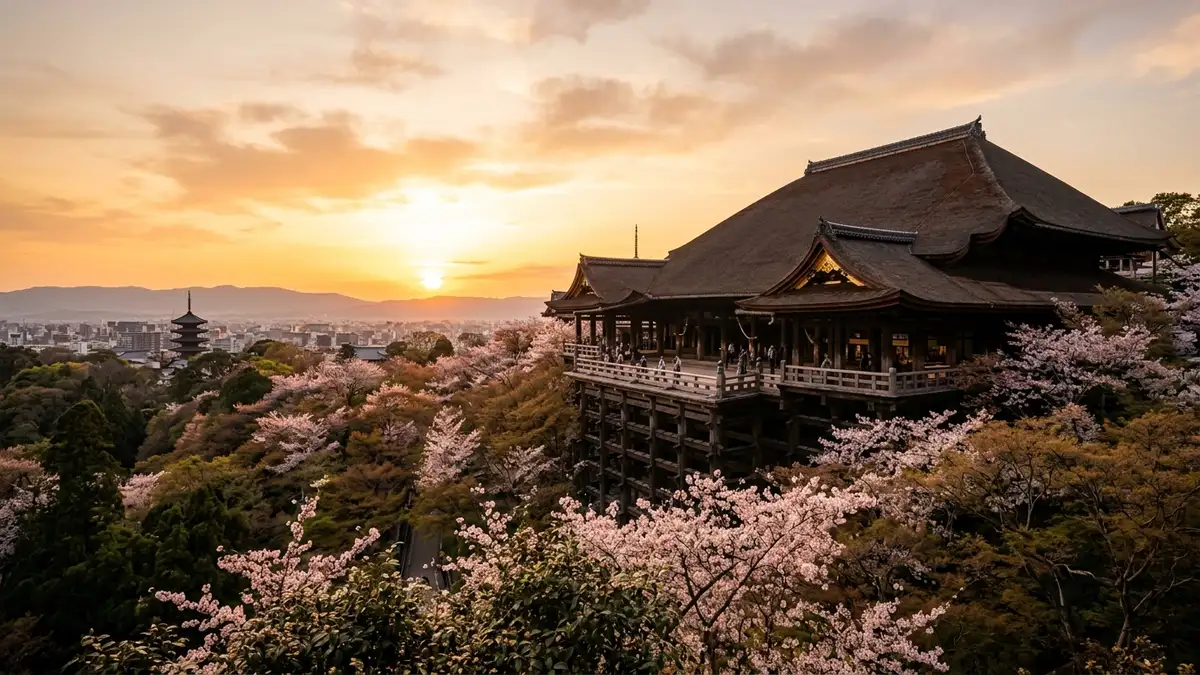
And what a city it is. Kyoto holds somewhere around two thousand temples and shrines — Fushimi Inari with its thousands of vermillion torii gates, the golden pavilion of Kinkaku-ji, the meditative rock gardens of Ryoan-ji. The Arashiyama bamboo grove delivers exactly the otherworldly atmosphere you've seen in photographs, and the Gion district still carries the quiet elegance of traditional geisha culture. This is a city built for slow, deliberate exploration.
Timing matters enormously here. Late March through April brings cherry blossom season, and Kyoto transforms into something almost impossibly beautiful — but so do the crowds and the prices. If you're chasing those iconic blossoms, book your flights three to five months out and expect to pay closer to standard fare. October and November offer fall foliage that rivals spring for sheer drama, often with slightly thinner crowds. If budget is the priority, the shoulder months of late May or September give you warm weather, fewer tourists, and the best shot at finding roundtrip fares under $700.
Japan Airlines and ANA both fly this route and are consistently excellent — attentive service, good legroom in economy by long-haul standards, and the food genuinely reflects where you're headed. One tip worth taking seriously: buy an IC card like a Suica or ICOCA when you arrive. It works on trains, buses, and even vending machines across the Kansai region, and it'll save you the mental overhead of buying individual tickets every time you move around the city.