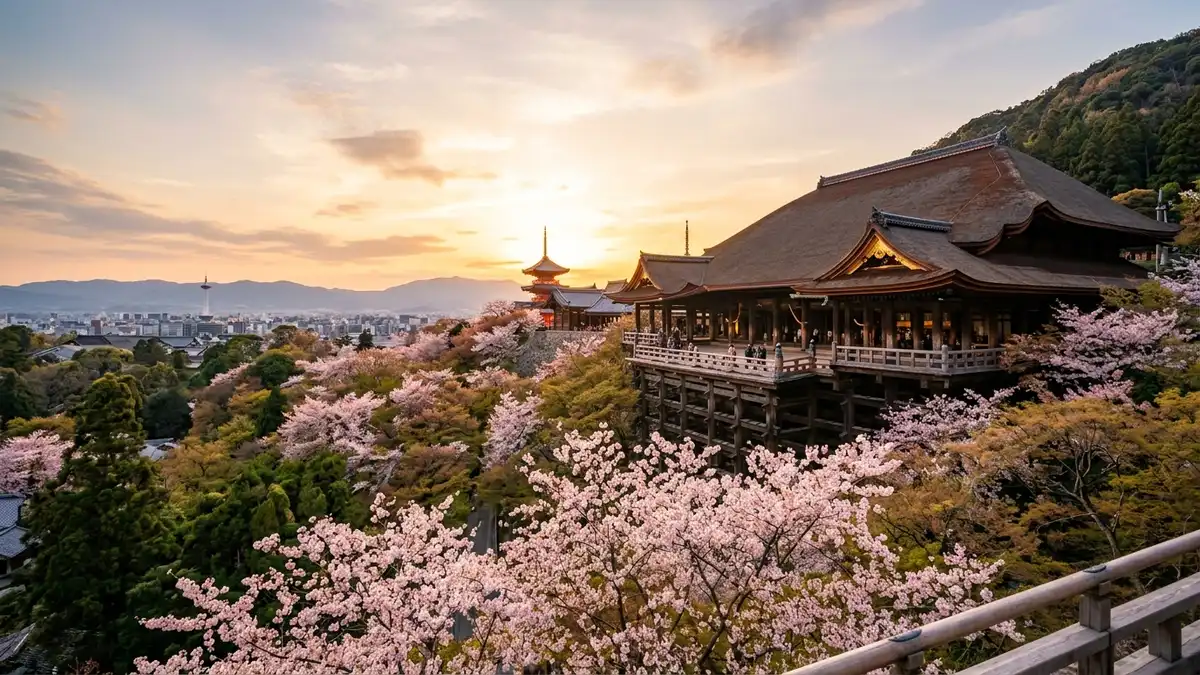



Route Briefing: Miami to Kyoto
Getting from Miami to Kyoto takes roughly 18 and a half hours with one stop, and every minute of that journey is worth it. This is one of those trips that genuinely changes how you see the world — Kyoto isn't just a destination, it's a living museum where Buddhist temples, Shinto shrines, and centuries-old wooden machiya townhouses coexist with everyday modern life in a way that feels completely natural.
Japan Airlines and ANA are the gold-standard carriers on this route, offering some of the best long-haul economy experiences in the business — think decent legroom, attentive service, and meals that actually taste like food. Korean Air routing through Seoul's Incheon Airport is another strong option and frequently comes in at a competitive price point. Speaking of which, a roundtrip under $700 is a genuinely good deal here — standard fares run $1,000 to $1,400 or more, so when you spot something below that threshold, move quickly. Booking three to six months ahead gives you the best shot at those lower fares, and it's worth comparing itineraries through Tokyo, Seoul, and other Asian hubs, since the routing can make a surprising difference in price.
Most flights into the Kyoto area land at Osaka's Kansai International Airport. From there, the Haruka Express train connects directly to Kyoto Station in under 80 minutes — it's comfortable, reliable, and far easier than navigating taxis or buses with luggage.
Timing your visit matters enormously here. Cherry blossom season from late March through April is magical but crowded and expensive — if you go, book accommodation months in advance. November brings spectacular autumn foliage that many travelers actually prefer, with slightly thinner crowds and cooler, pleasant temperatures. Summer is peak domestic travel season in Japan, so expect heat, humidity, and busy temples.
Once you're there, the Arashiyama bamboo grove, the golden pavilion of Kinkaku-ji, and the thousands of vermilion torii gates winding up Fushimi Inari are the kind of sights that justify the long haul entirely. The Gion district, Kyoto's famous geisha quarter, is best explored on foot in the early evening when the stone-paved lanes feel genuinely atmospheric.
One tip that pays dividends: buy an IC card like Suica or ICOCA as soon as you arrive. It works on buses, trains, and even convenience store purchases across Kyoto and beyond, eliminating the friction of buying individual tickets every time you move around the city.