


Route Briefing: Los Angeles to Kyoto
Flying from Los Angeles to Kyoto is one of those journeys that genuinely rewards the effort. You're looking at around 12 and a half hours in the air with one stop — most commonly through Tokyo or the Osaka area — and while that's a commitment, landing in Japan's ancient imperial capital makes every hour worthwhile. KIX, Kansai International Airport, is your best bet for this route. It sits closer to Kyoto than Tokyo's airports do, and from there a direct train on the Haruka Express will have you in central Kyoto in roughly 75 minutes without the stress of navigating a transfer city.
JAL and ANA are the gold standard carriers on this route — both offer exceptional service, and frequent flyers consistently praise the food and comfort even in economy. United operates codeshare options via Tokyo if you're working with miles or loyalty points. A roundtrip under $700 is a genuinely good deal here; standard fares tend to run $900 to $1,200 or more, so when you see something in the $600s, move quickly.
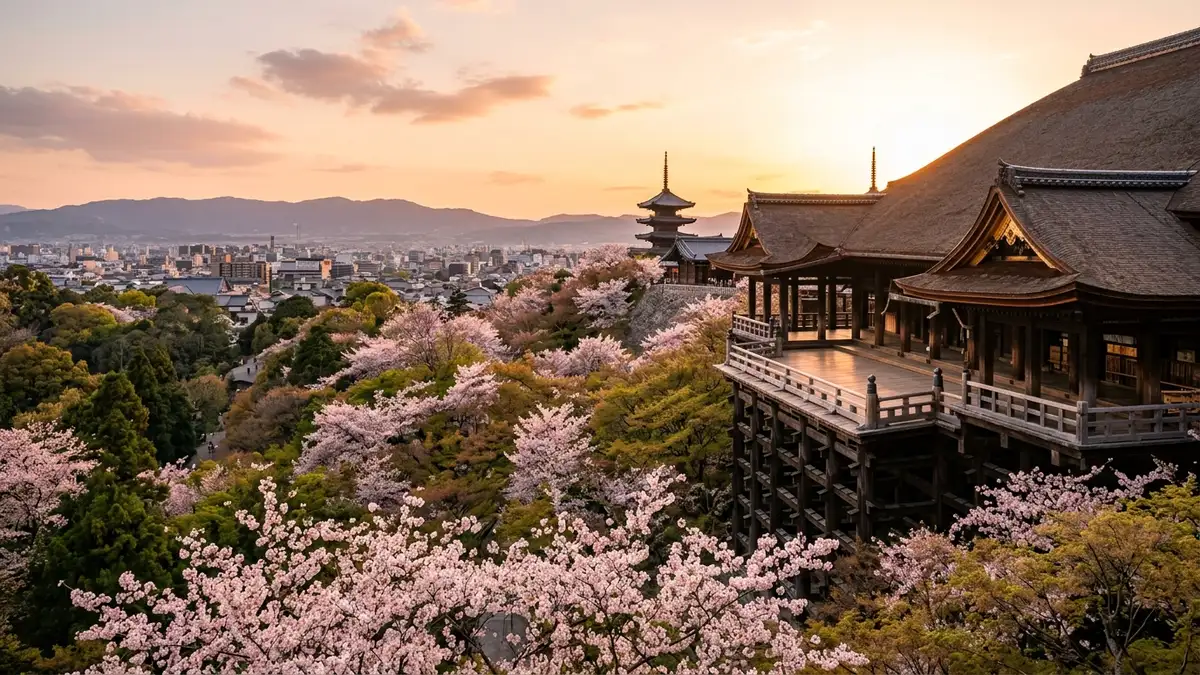
Timing matters enormously for Kyoto. Cherry blossom season — roughly late March through early May — transforms the city into something almost impossibly beautiful. The famous Philosopher's Path, the grounds of Maruyama Park, the temple gardens — all of it blooms at once. Fall foliage from October into November runs a close second, painting the hillside temples in deep reds and golds. Both windows are wildly popular, so book your flights three to five months ahead if you're targeting either season. Prices climb and seats disappear fast.
Outside those peaks, Kyoto in summer is hot and humid but far less crowded, and winter brings a quieter, more contemplative atmosphere — some travelers find the city at its most authentic when the tour groups thin out.
On the ground, Kyoto rewards slow exploration. The Arashiyama bamboo grove, the vermillion torii gates of Fushimi Inari, the geisha district of Gion — these aren't overhyped. They genuinely deliver. Japanese cuisine here leans toward kaiseki, the refined multi-course tradition, but ramen shops, tofu-centric dishes, and street food around Nishiki Market offer incredible eating at every budget.
One tip worth its weight: buy an IC card like a Suica or ICOCA at the airport. It works on trains, buses, and even convenience store purchases across the country, and it will save you from fumbling with cash or tickets every time you move around the city.