


Route Briefing: Dallas to Busan
If you've been dreaming of a Korean adventure but assumed Seoul was your only gateway, let Busan change your mind entirely. This coastal city in the southeast is Korea's second largest, and in many ways it's the country's most soulful — a place where fishermen still haul in the morning catch while surfers ride waves just down the beach. Flying from Dallas Fort Worth, you're looking at around 18 and a half hours with one stop, typically connecting through Seoul's Incheon Airport or Tokyo's Narita. It's a long haul, no question, but Korean Air and Asiana Airlines are consistently excellent carriers on this corridor, offering solid service that makes the journey genuinely comfortable rather than something to merely survive.
On the fare side, anything under $700 roundtrip is a genuine win — standard pricing tends to run between $1,000 and $1,400 or more, so patience pays off here. Book three to five months out, and watch for connecting itineraries through Incheon or Narita, which tend to surface the most competitive prices. Avoid peak summer months and the late December holiday window if budget is your priority, as those periods drive fares up considerably.
Busan itself rewards you the moment you arrive. Haeundae Beach is one of Asia's most famous urban beaches, lively and beautiful, while nearby Gwangalli Beach offers a slightly more relaxed vibe with a stunning bridge view at night. The Jagalchi Fish Market is an absolute must — it's one of the largest seafood markets in Korea, and eating fresh raw fish or grilled shellfish right there at the market stalls is an experience that stays with you. For something quieter and deeply moving, the Haedong Yonggungsa Temple sits dramatically on coastal cliffs overlooking the sea, which is genuinely rare for a Buddhist temple in Korea.
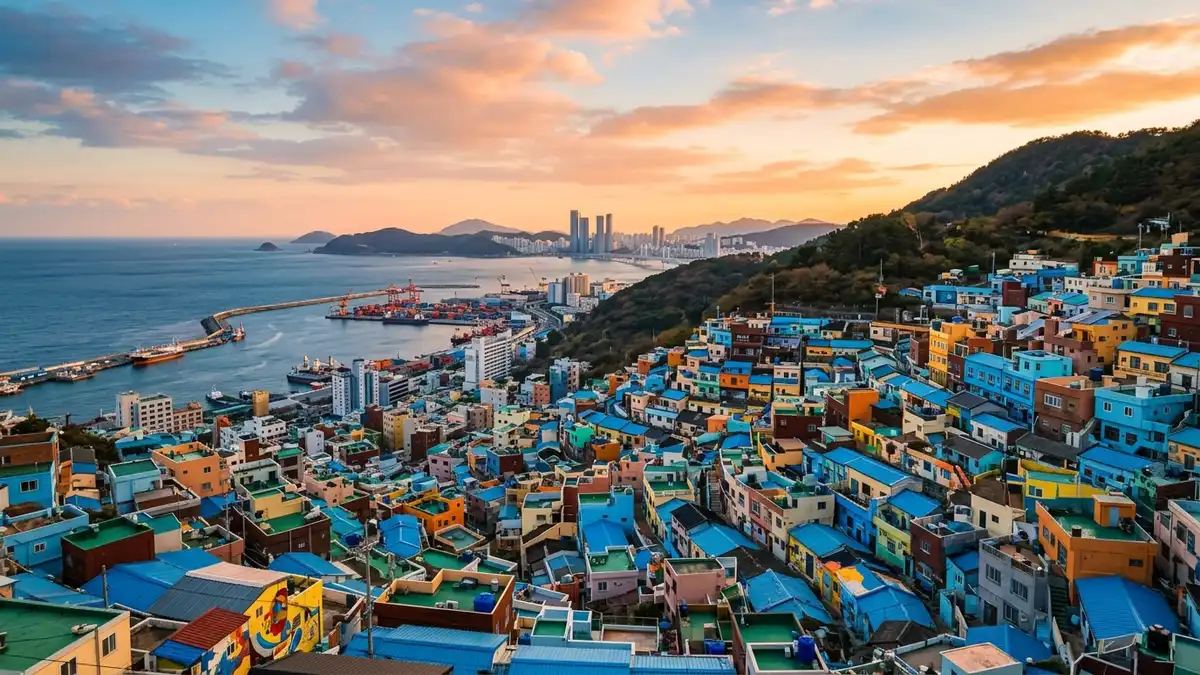
Don't miss Gamcheon Culture Village, a hillside neighborhood of brightly painted houses that has become one of Busan's most photographed spots — it has real charm beyond the Instagram appeal, with small galleries and local cafés tucked into its winding lanes.
Getting from Gimhae International Airport into the city is straightforward. The Busan-Gimhae Light Rail Transit connects the airport to the metro system, making it easy and affordable to reach most central neighborhoods without relying on taxis.
The single best tip for this route: if you have flexibility, build in a night in Seoul during your layover at Incheon. The airport has excellent transit hotel options and the city is easily accessible, turning a connection into a genuine two-city Korean adventure without adding a separate flight to your itinerary.