


Route Briefing: Dallas to Kyoto
There are long-haul flights, and then there are flights that feel like a genuine pilgrimage — and the journey from Dallas to Kyoto is firmly in the second category. At around 16 and a half hours with one stop, typically connecting through Tokyo or Los Angeles, this is not a casual weekend hop. But Kyoto is one of those rare destinations that earns every hour in the air, and then some.
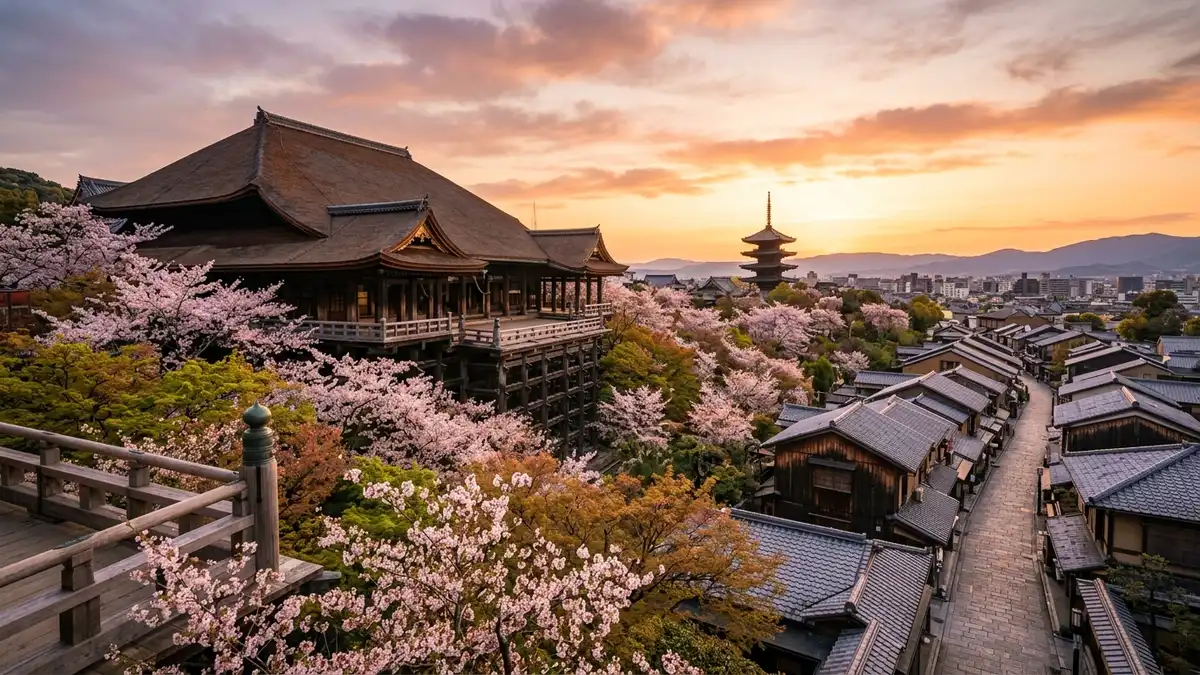
Kyoto is where Japan kept its soul. While Tokyo sprinted into the future, Kyoto held its ground — preserving over a thousand temples and shrines, entire neighborhoods of traditional wooden machiya townhouses, and the living art of geisha culture in the Gion district. Walk the stone-paved lanes of Higashiyama at dusk, wander through the otherworldly bamboo grove at Arashiyama, or rise before sunrise to have Fushimi Inari's famous vermillion torii gates almost entirely to yourself. The city rewards early risers and slow travelers in equal measure.
Timing matters enormously here. Cherry blossom season from late March through April transforms Kyoto into something almost impossibly beautiful, but it also brings peak crowds and peak prices. If you can travel in November, the autumn foliage is equally stunning with noticeably thinner crowds. July and August are popular but hot and humid — manageable, but worth knowing before you pack.
On the fare side, a roundtrip under $700 from DFW is genuinely excellent value for this route — standard pricing runs $1,000 to $1,400 or more. Japan Airlines and American Airlines are among the top carriers serving this corridor, and booking three to six months ahead gives you the best shot at those lower fares. Flexibility on travel dates by even a few days can make a meaningful difference.
Once you land at Osaka's Kansai International Airport, Kyoto is very accessible by rail. The Haruka Express train connects KIX directly to Kyoto Station, making it a smooth and stress-free arrival even after a long flight.
The single best experience-enhancing tip for this trip: buy an IC card like an ICOCA at the airport the moment you arrive. It works on trains, subways, and buses across the Kansai region and eliminates the friction of buying individual tickets every time you move — which in a city as layered and explorable as Kyoto, will be constantly.