


Route Briefing: Denver to Manila
Denver to Manila is one of those routes that rewards the curious traveler willing to put in the hours — and at roughly 17 and a half hours in the air with one stop, you're looking at a serious journey. But here's the thing: what's waiting on the other end makes every minute worthwhile. The Philippines is one of Southeast Asia's most genuinely exciting destinations, and Manila is your gateway to over 7,000 islands, each with its own personality.
The route connects through major Asian hubs — Seoul's Incheon, Tokyo, or Taipei are the most common layover cities — and that's actually good news for your wallet. Korean Air through Seoul and Philippine Airlines via codeshare connections are solid options, as is United, but routing through Incheon or Taipei consistently turns up the most competitive fares. A roundtrip under $700 is a genuine deal on this route; standard pricing runs $900 to $1,200 or more. Book three to six months out, especially if you're eyeing the December to January holiday window, when Filipinos celebrate Christmas with an enthusiasm that's genuinely infectious and unlike anywhere else in Asia.
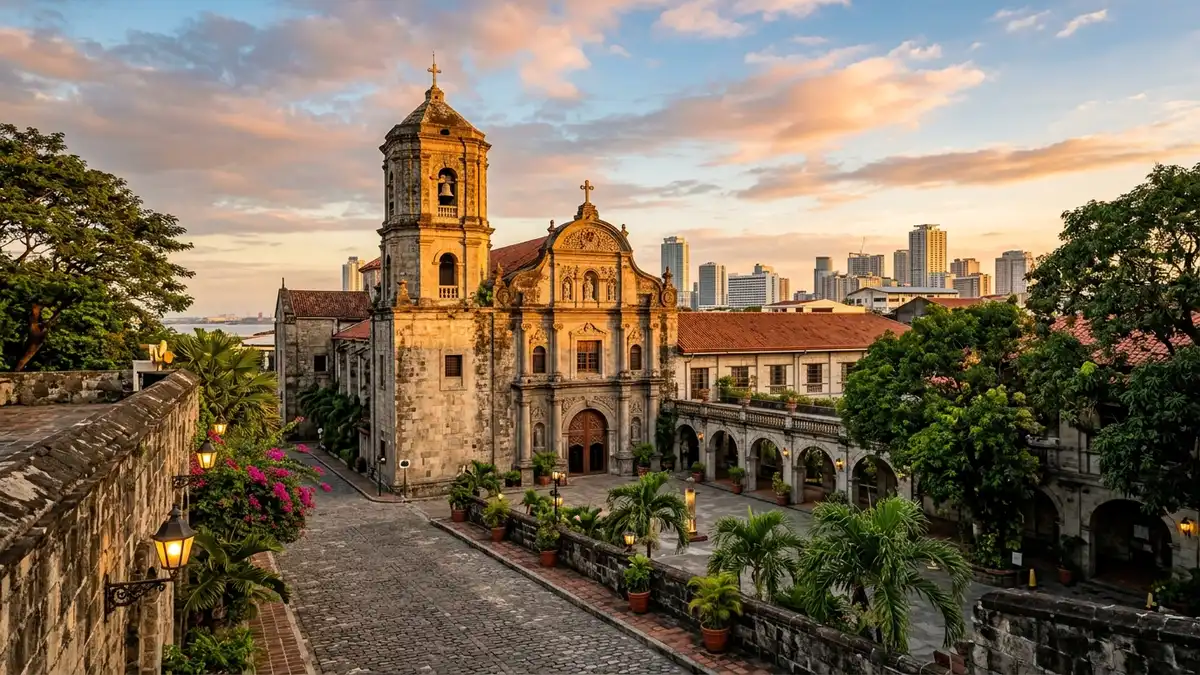
Manila itself is a city of contradictions in the best possible way — Spanish colonial churches standing alongside gleaming malls, chaotic street food scenes next to world-class restaurants, and a waterfront promenade along Manila Bay famous for its sunsets. Intramuros, the old walled city, is a must — you can walk or cycle its cobblestone streets and feel the weight of 400 years of history. The National Museum complex near Rizal Park is excellent for understanding the country's layered past.
When you land at Ninoy Aquino International Airport, the most reliable way into the city center is by metered taxi or a ride-hailing app — both are widely available at the airport. Traffic in Manila is notoriously heavy, so factor in extra time, particularly during rush hours.
Timing matters here. US summer (June through August) and the Christmas-New Year period are peak seasons, meaning higher fares and more crowds. If your schedule is flexible, the months just outside those windows — think late January through March — offer drier weather, thinner crowds, and better prices. The dry season generally runs from around November through April, making it the most comfortable time to explore both the capital and the islands beyond.
One tip that genuinely changes the trip: don't treat Manila as just a layover city before heading to the beaches. Give it two or three days. The food alone — from crispy lechon to sinigang to the incredible street snacks — justifies the time. Then head out to the islands knowing you've actually met the country on its own terms.