


Route Briefing: Dubai to Manila
Nearly nine hours separates the gleaming towers of Dubai from the chaotic, colourful heart of Southeast Asia, and honestly, that flight time feels like a bargain when you consider what's waiting on the other side. Manila is one of those cities that grabs you by the collar the moment you land — loud, layered, and absolutely alive with energy. It's the gateway to over seven thousand islands, which means whatever you came for — white sand beaches, centuries-old churches, volcanic landscapes, or street food that will rearrange your priorities — the Philippines delivers.
Emirates and Philippine Airlines both serve this route directly, with Cebu Pacific offering a budget-friendly alternative worth checking. A good roundtrip fare comes in under $450, while standard pricing tends to hover above $700, so timing your search matters. Book two to four months ahead and you'll be in the sweet spot. Avoid December if your budget is the priority — Christmas is sacred in the Philippines, and the whole country travels, which pushes fares and hotel prices sharply upward. The same applies to Holy Week in March or April. If you can travel mid-week and sidestep those peak windows, you're realistically looking at savings of 20 to 30 percent on this route.
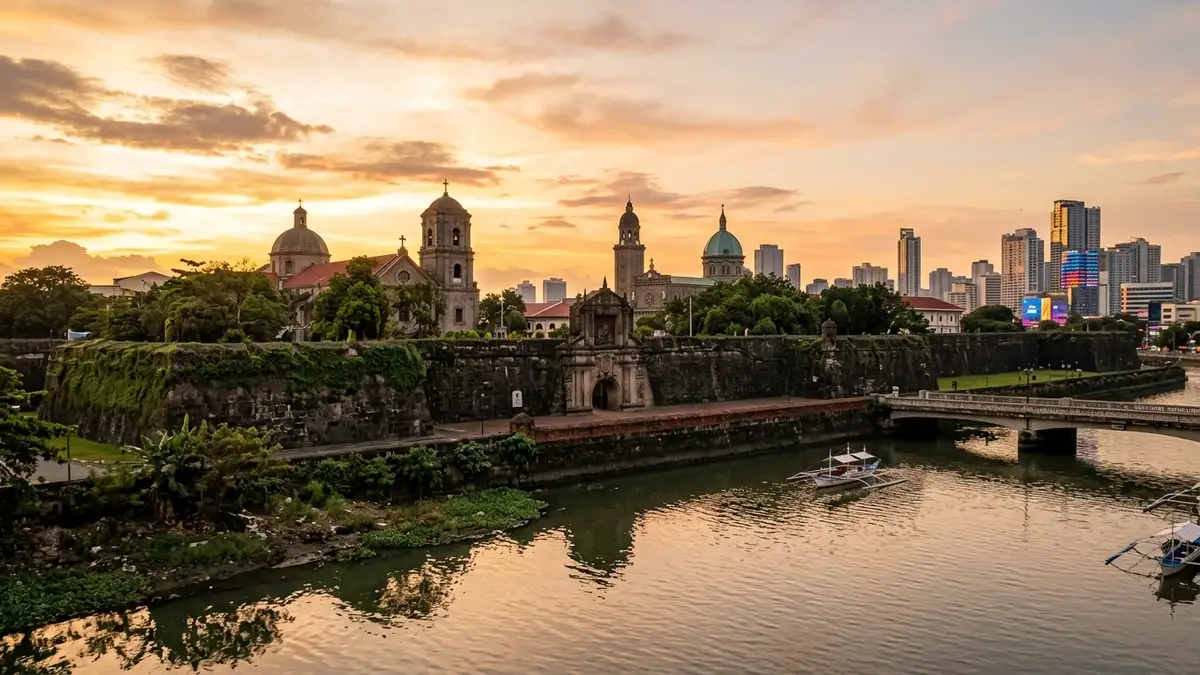
The best time to visit Manila itself is during the dry season, roughly November through April, when humidity is more manageable and rain less likely to derail your plans. The city's Spanish colonial heritage is most vivid in Intramuros, the walled city district where cobblestone streets and centuries-old fortifications tell the story of over three hundred years of colonial rule. Fort Santiago and the Manila Cathedral are genuinely worth your time, not just as photo stops but as places that put the country's layered history into sharp relief.
From Ninoy Aquino International Airport, the city centre is relatively close in distance but Manila traffic is famously punishing, so factor in extra time. Metered taxis and ride-hailing apps are your most straightforward options from the terminal.
The food scene is the real secret weapon. Filipino cuisine — adobo, sinigang, lechon — is deeply satisfying and remarkably affordable, and Manila's restaurant culture ranges from humble neighbourhood spots to genuinely world-class dining. Street food is everywhere and very much worth exploring.
One tip that transforms the trip: use Manila purely as your launchpad. Spend a day or two absorbing the city, then head to the islands. The Philippines rewards those who keep moving.