


Route Briefing: Dublin to Kyoto
There's something quietly poetic about flying from one ancient capital to another — Dublin, where history seeps through every cobblestone, to Kyoto, where it floats on incense smoke through thousand-year-old temple gates. This is a long-haul commitment at around fourteen and a half hours with one stop, but for a city that genuinely earns the title of Japan's cultural soul, it's absolutely worth the journey.
From Dublin, Finnair routing through Helsinki and Emirates through Dubai tend to offer the most competitive fares on this corridor. If you can land a roundtrip under €900, grab it without hesitation — that's a genuinely strong deal on a route where standard pricing climbs comfortably into the €1,200 to €1,600 range. Cathay Pacific is another solid option worth checking. The golden rule here is simple: book three to six months out. This route rewards the planners.
Kyoto arrives through either Osaka Itami or Kansai International Airport, and from Kansai in particular, the rail connections into the city are smooth and efficient — Japan's train network is famously reliable, so arriving without a pre-booked taxi is no hardship at all.
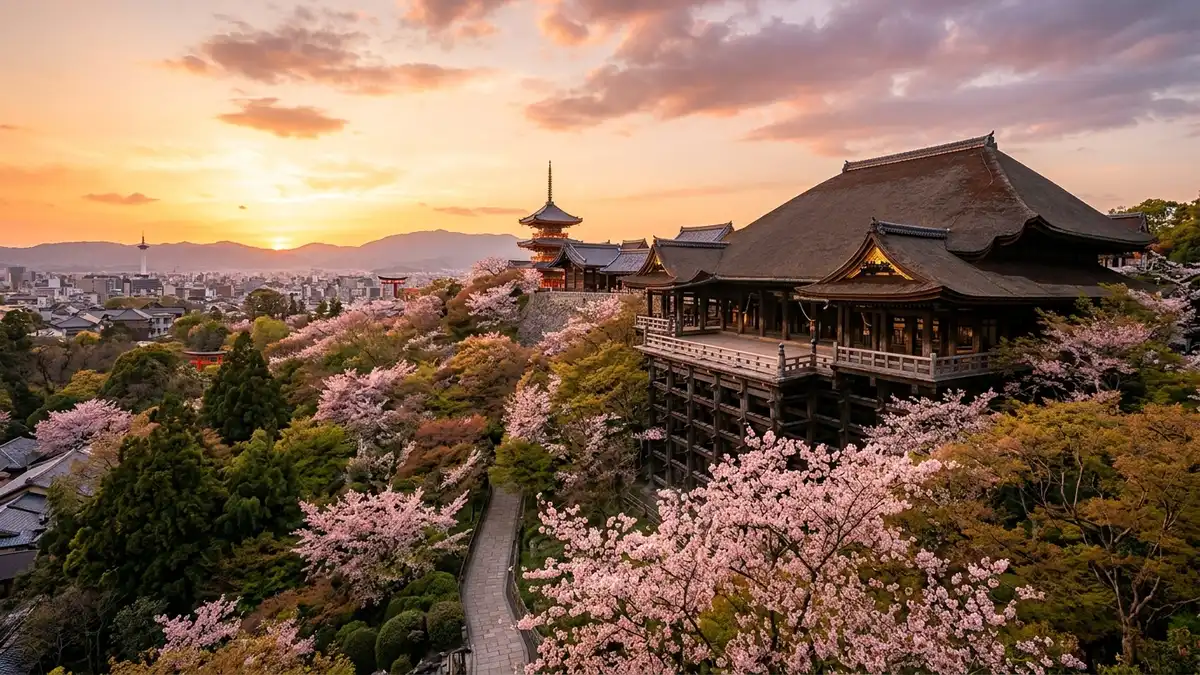
Timing your visit shapes everything. March and April bring cherry blossom season, when Kyoto transforms into something almost unreal — pale pink clouds drifting over temple rooftops and along the Philosopher's Path canal walk. It's peak season for good reason, and crowds reflect that. October and November deliver the equally spectacular autumn foliage, when the maple trees around places like Arashiyama and the hillside temple districts blaze in deep reds and golds. Both windows are worth the premium if your schedule allows.
Outside those peaks, Kyoto still delivers. The bamboo groves at Arashiyama, the vermillion torii gates of Fushimi Inari Shrine, the preserved geisha district of Gion — these don't disappear in February or July. The city has over two thousand temples and shrines, and even a week barely scratches the surface.
One genuinely useful tip: get a Suica or ICOCA card on arrival. These rechargeable IC cards work on trains, buses, and even convenience store purchases across the Kansai region, saving you the friction of buying individual tickets at every stop. It's a small thing that makes daily movement feel effortless — and in a city this rich, you want your energy spent on discovery, not logistics.