


Route Briefing: Frankfurt to Manila
Frankfurt to Manila is one of those long-haul routes that genuinely rewards the effort. Yes, you're looking at around thirteen and a half hours in the air with a typical stopover, but what's waiting on the other end is the gateway to over seven thousand islands — a country so varied in landscape, culture, and cuisine that most travellers end up booking a return trip before they've even left.
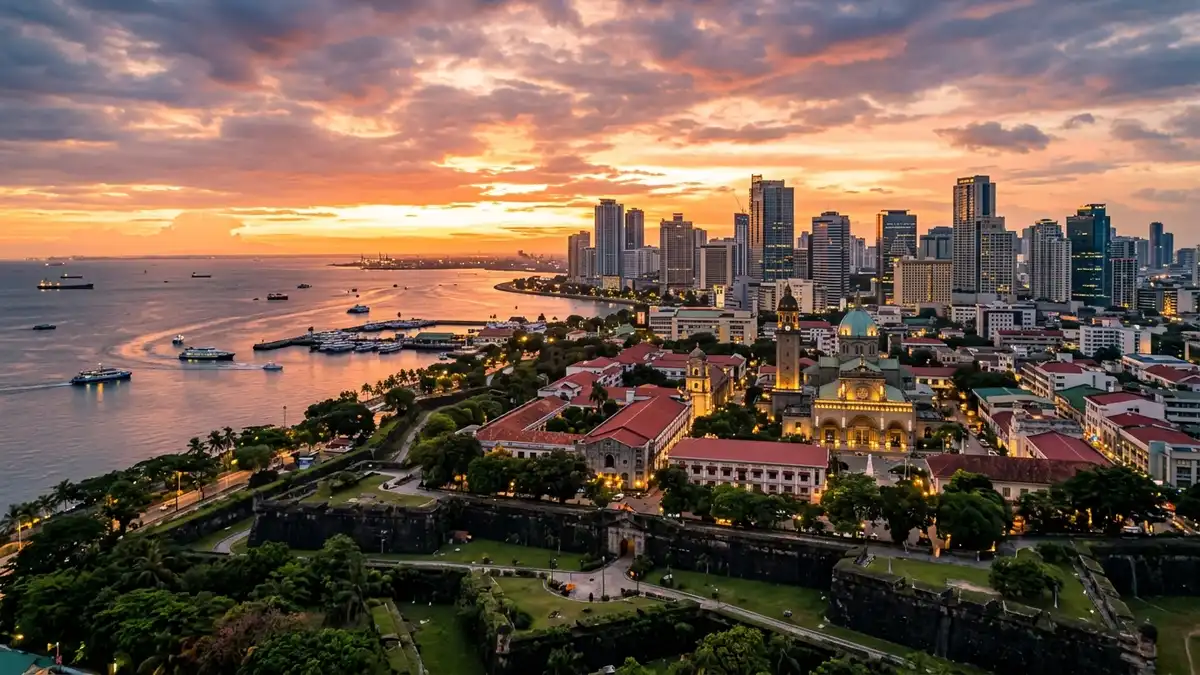
Manila itself is a city of contradictions in the best possible way. Spanish colonial churches sit alongside gleaming shopping malls, chaotic street food markets buzz next to rooftop bars, and the waterfront promenade of Rizal Park offers a surprisingly peaceful escape from the city's famous energy. The walled historic district of Intramuros is essential — centuries of Spanish colonial history compressed into cobblestone streets and thick stone fortifications. Fort Santiago within its walls carries a particularly moving history tied to national hero José Rizal.
Lufthansa and Philippine Airlines are the natural choices on this route, with Emirates also a strong option if you're open to connecting through Dubai. Speaking of connections — routing through Dubai, Doha, or Singapore can sometimes unlock meaningfully lower fares, so it's worth comparing a few itineraries when you search. A roundtrip under $700 represents genuinely good value here; standard fares typically run $900 to $1,200 or more, so booking two to four months ahead gives you the best shot at the lower end.
Timing matters in the Philippines. December through January brings cooler, drier weather and a festive atmosphere — Filipinos celebrate Christmas with extraordinary enthusiasm and the season stretches well into the new year. June through August is peak season too, though the western side of the country can see typhoon activity during this period, so it's worth checking which islands you plan to visit. For Manila specifically, the dry season between November and April is generally the most comfortable.
On arrival, Ninoy Aquino International Airport sits relatively close to the city centre, but Manila's traffic is legendary, so build in extra time regardless of when you land. Ride-hailing apps are widely used and reliable for getting into the city without the stress of negotiating fares.
The practical tip worth remembering: Manila is best treated as a launchpad rather than a final destination. Budget a couple of days to absorb the city, then use its excellent domestic connections to reach Palawan, the Visayas, or wherever the islands take you. The real magic of the Philippines unfolds once you leave the capital.