


Route Briefing: Las Vegas to Kyoto
Trading the neon sprawl of the Las Vegas Strip for the lantern-lit stone paths of Kyoto is one of travel's great contrasts — and honestly, one of its most rewarding ones. This route runs year-round, connecting two cities that couldn't feel more different, and that tension is exactly what makes the journey so compelling.
Flights from Las Vegas to Kyoto run around 13 hours and 30 minutes with one stop, typically connecting through Tokyo or Osaka. Japan Airlines and ANA are the carriers most seasoned travelers trust on this corridor — both offer genuinely comfortable economy cabins with solid meal service and in-flight entertainment, which matters a lot on a long-haul Pacific crossing. United is another solid option if you're working with miles or prefer a domestic connection out of Vegas first.
On the fare side, anything under $700 roundtrip is a genuine deal worth jumping on. Standard pricing tends to sit above $1,000, so when you see that sub-$700 window, don't overthink it. Book three to six months out for the best shot at those fares, and be flexible with your travel dates if you can.
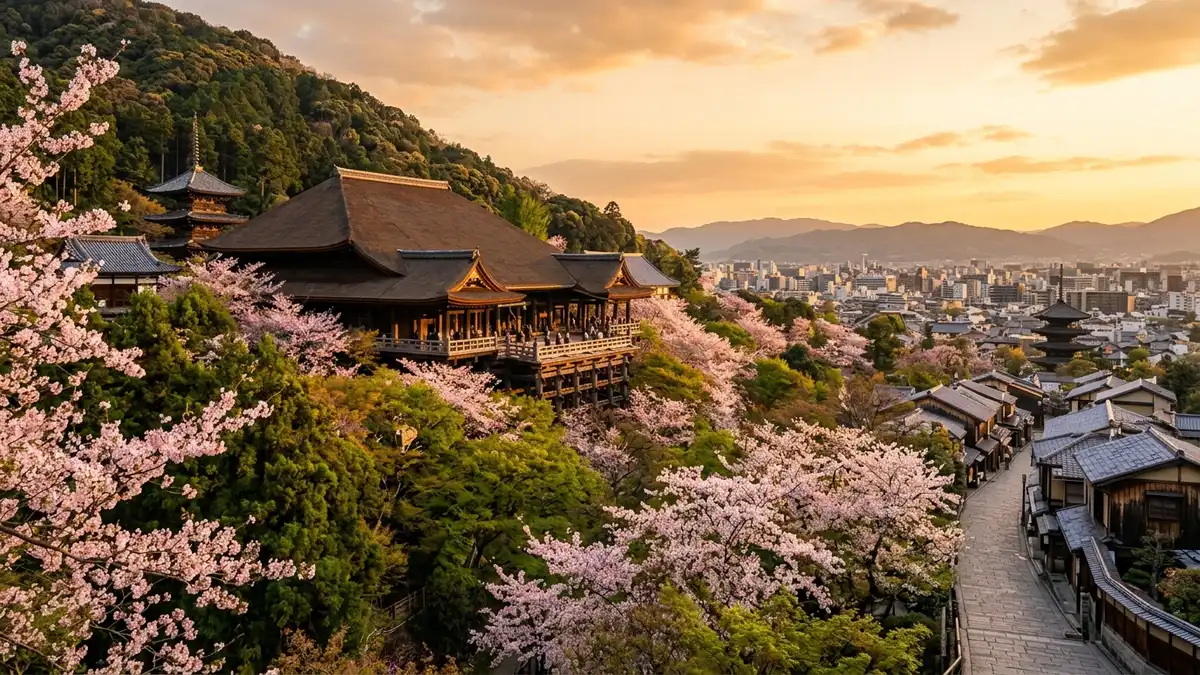
Timing matters enormously in Kyoto. Cherry blossom season from March through April is the stuff of postcards — the city's parks, temple grounds, and canal paths turn pink and ethereal — but crowds are real and prices spike. Fall foliage from October through November is arguably just as beautiful and slightly less overwhelming. If you want Kyoto at its most atmospheric without fighting for space, aim for early November or the shoulder weeks just before peak bloom in late March.
If you fly into Kansai International Airport, the Haruka Express train connects directly to central Kyoto in under 80 minutes, making it one of the smoothest airport-to-city transfers in Japan. The train system here is punctual and easy to navigate even without Japanese language skills.
Kyoto itself rewards slow travel. The Arashiyama bamboo grove, the thousands of torii gates climbing Fushimi Inari, the preserved geisha district of Gion — these aren't overhyped. They genuinely deliver. The city's food culture, built around kaiseki multi-course dining, fresh tofu, and matcha everything, is reason enough to visit on its own.
One tip that pays dividends: buy an IC card like a Suica or ICOCA when you arrive. It works on trains, buses, and even convenience store purchases across the city, and it eliminates the friction of buying individual tickets every time you move around. Small thing, big difference.