


Route Briefing: London to Manila
Flying from London to Manila is one of those routes that genuinely rewards the effort. Yes, you're looking at around thirteen and a half hours in the air with a stop along the way, but what waits at the other end is the gateway to over seven thousand islands — and that's not a travel brochure exaggeration, that's just the Philippines being the Philippines.
Cathay Pacific, Emirates, and Qatar Airways dominate this route, and the good news is that connecting through Hong Kong or the Middle East tends to keep both fares and layover times reasonable. If you can be flexible and book three to six months ahead, you're in realistic territory for a roundtrip under six hundred pounds — a genuine bargain for Southeast Asia. Leave it late and you'll be looking at nine hundred or more, so plan ahead if your budget matters to you.
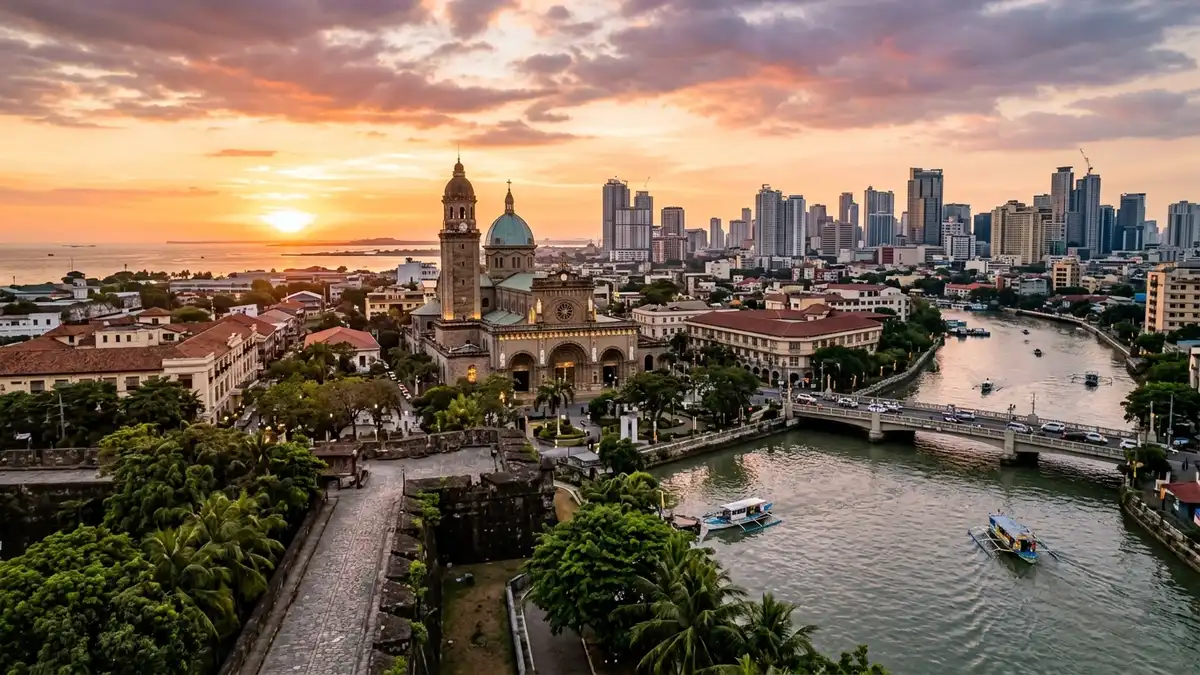
Manila itself is a city that doesn't ease you in gently. It's loud, layered, and completely alive. The historic district of Intramuros is where the Spanish colonial past is most tangible — thick stone walls, cobbled streets, and centuries of complicated history compressed into a few walkable blocks. Beyond that, the city sprawls into distinct neighbourhoods each with their own personality, from the upscale dining and shopping of Bonifacio Global City to the gritty energy of older districts closer to Manila Bay. Sunsets over the bay are genuinely spectacular and entirely free.
Filipino food deserves serious attention. Adobo, sinigang, lechon — these are dishes with real depth and regional variation, and eating well here doesn't require spending much at all. Street food is abundant, flavourful, and a perfectly legitimate way to eat.
For getting into the city from Ninoy Aquino International Airport, metered taxis and ride-hailing apps are your most straightforward options. Traffic in Manila is notoriously heavy, so build extra time into any airport transfer, especially during rush hours.
Timing your visit matters more here than in many destinations. December and January are peak season — Filipinos celebrate Christmas with extraordinary enthusiasm, and the atmosphere is genuinely festive, though prices rise and crowds build. If you want warmth, lower humidity, and manageable crowds, the months between November and April generally offer the most reliable dry weather. The summer months bring typhoon season, which is worth factoring into your planning.
The one tip worth repeating: Manila is best treated as a launchpad. Book a few nights there to recover from the flight, then use the city's domestic connections to reach the beaches, rice terraces, or diving spots that will likely become the real highlight of your trip.