


Route Briefing: Mumbai to Busan
If you've been dreaming of trading Mumbai's relentless energy for salt air, seafood, and the kind of coastal beauty that makes you forget your phone exists, Busan is quietly one of Asia's most rewarding destinations — and this route is more accessible than most travellers realise.
Getting there takes around eleven and a half hours with one stop, typically routing through Seoul's Incheon Airport, which is actually a pleasure as far as layovers go — Incheon is consistently ranked among the world's best-run airports and gives you a genuine taste of Korean efficiency before you've even reached your destination. Air India, Korean Air, and Asiana Airlines all serve this route, and if you catch it right, roundtrip fares can dip under $600. Standard pricing sits above $900, so timing genuinely matters here. Book two to four months ahead, fly midweek if you can, and you'll likely land the better end of that range.
Once you arrive at Gimhae International Airport, Busan's city centre is easily reachable by subway — the airport connects directly to the metro system, making it one of the more straightforward arrivals in the region. No need to negotiate taxis or hunt for shuttle buses on day one.
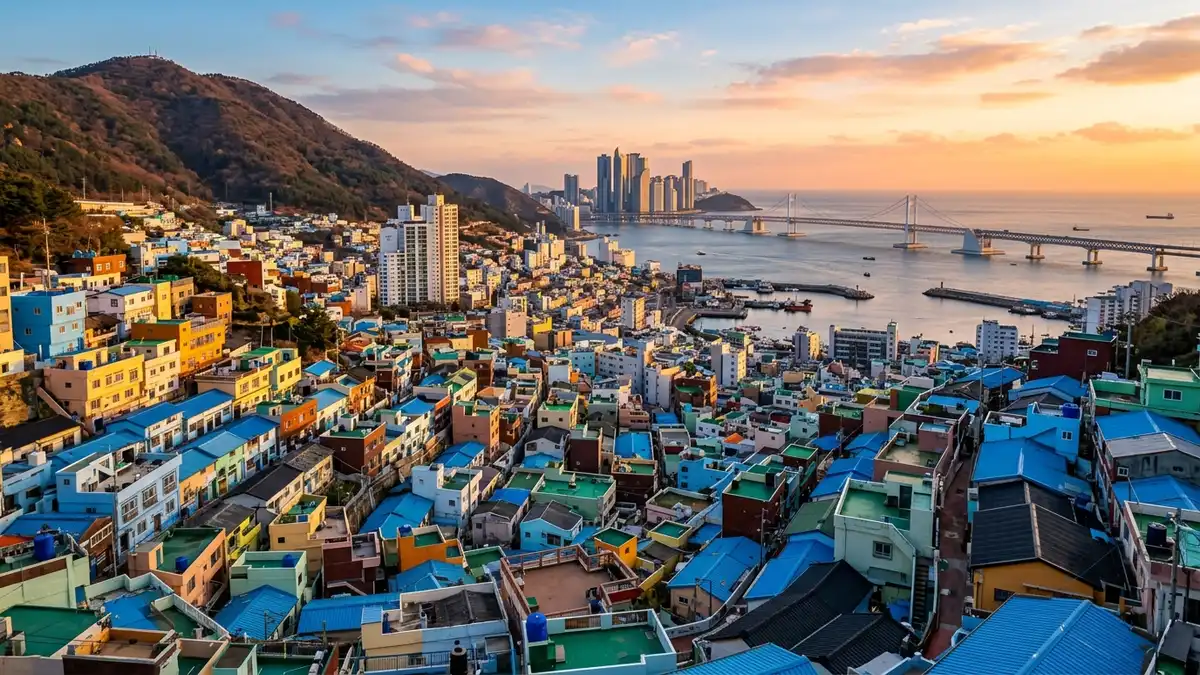
Busan itself operates at a different frequency to Seoul. It's Korea's second city but feels like its own world — a port town built into hills that tumble down to the sea, where fishing culture and modern life sit comfortably side by side. Jagalchi Market is the place to go for an overwhelming, wonderful introduction to Korean seafood culture; it's one of the largest fish markets in the country and absolutely worth arriving hungry. Haeundae Beach draws summer crowds for good reason, while Gamcheon Culture Village — a hillside neighbourhood painted in vivid colours — offers something genuinely photogenic without feeling manufactured. For quieter reflection, Haedong Yonggungsa Temple sits directly on the coastline, which is rare for Buddhist temples anywhere in Korea.
Timing your visit shapes the experience considerably. July and August bring beach energy and festivals but also heat, humidity, and higher fares. December through January is peak again — colder but atmospheric, with fewer tourists outside the holiday window. The shoulder months of spring and autumn offer mild weather and noticeably thinner crowds, which for a city this beautiful feels like an insider advantage.
One tip worth holding onto: Korea's T-money transit card works across Busan's buses and subway, and you can load it at convenience stores throughout the city. It's a small thing that removes a surprising amount of daily friction and lets you move around like a local from day one.