


Route Briefing: Mumbai to Kyoto
Flying from Mumbai to Kyoto is one of those journeys that genuinely rewards the effort. At around ten and a half hours with a connection — typically through a hub like Delhi or Tokyo — you're looking at a manageable trip to one of the most extraordinary cities on the planet. Air India, Japan Airlines, and ANA all serve this corridor, and if you're flexible with your routing, connecting through Delhi can sometimes unlock noticeably lower fares. A roundtrip under $600 is a genuine deal worth jumping on; standard pricing tends to sit between $900 and $1,200, so keeping alerts active on FlightKitten pays off here.
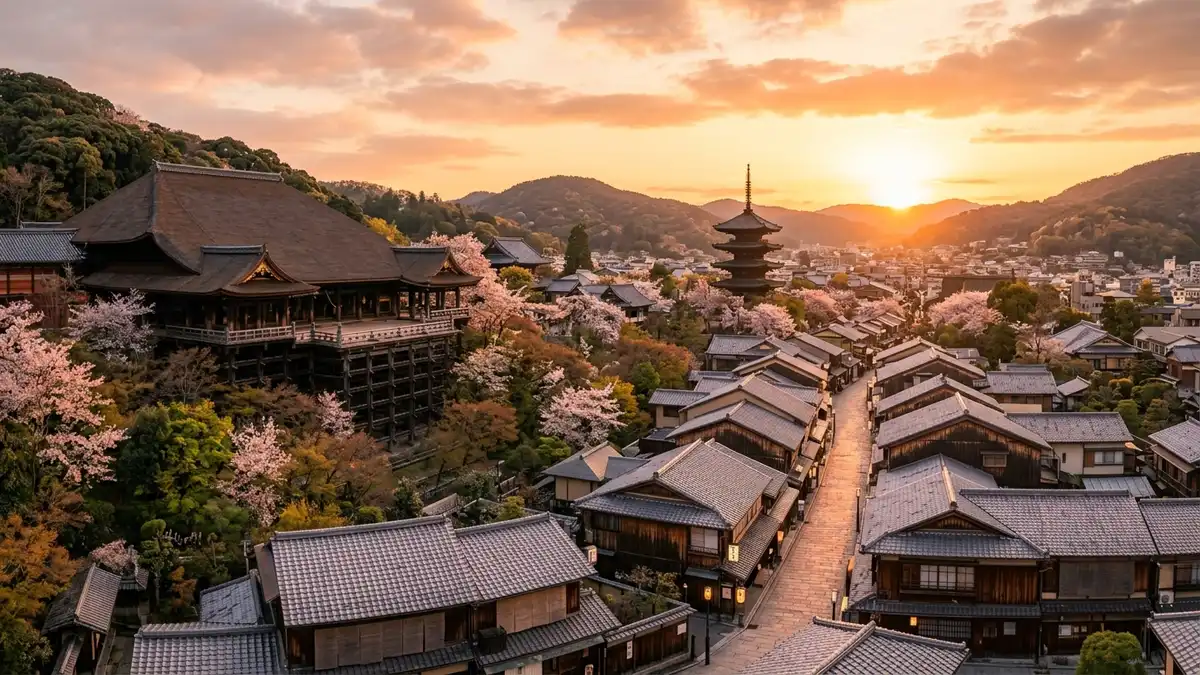
Kyoto isn't just a destination — it's an experience that recalibrates your sense of time. As Japan's ancient imperial capital, it holds an almost impossible concentration of temples, shrines, and traditional culture within a single city. Wandering through the thousands of vermilion torii gates at Fushimi Inari, stepping into the stillness of Arashiyama's bamboo grove, or catching a glimpse of a geisha moving through the stone-paved lanes of Gion — these aren't tourist clichés, they're genuinely moving moments that stay with you. The city's food culture is equally serious, with a refined local cuisine tradition built around seasonal ingredients and quiet precision.
Most international flights arrive into Kansai International Airport (KIX), which is well connected to Kyoto by the Haruka Express train — a comfortable, direct service that gets you into the city without any fuss. If you fly into Osaka Itami (ITM), limousine bus services run directly to Kyoto as well.
Timing your visit makes an enormous difference. March through April brings the legendary cherry blossoms, transforming temple gardens and riverside paths into something almost surreal. October and November deliver equally stunning autumn foliage — fiery maples against ancient wooden architecture. Both seasons are spectacular and both see significant price spikes, so booking two to four months in advance is genuinely important, not just a suggestion. If you want the beauty without the crowds or the premium fares, late November after peak foliage or early March before full bloom can offer a sweet spot.
The one tip worth holding onto: get a Suica or ICOCA card the moment you arrive. These rechargeable IC cards work on trains and buses across the Kansai region and eliminate the friction of buying individual tickets — a small thing that makes moving around Kyoto and nearby Osaka or Nara feel effortless. Kyoto is a city that rewards slow exploration, and anything that removes logistical noise lets you sink deeper into it.