


Route Briefing: Paris to Busan
If you've been dreaming of trading Parisian boulevards for crashing Pacific waves and steaming bowls of seafood, the Paris-to-Busan route is one of those journeys that genuinely rewards the effort. At around 13 and a half hours with one stop — most commonly through Seoul's Incheon Airport — it's a long haul, but Korean Air and Asiana Airlines both run comfortable connections, and Air France rounds out your options if you prefer a European carrier for the outbound leg. Snag a roundtrip under $700 and you're doing very well; standard fares creep past $1,000, so timing your booking matters. Aim to lock in tickets two to four months ahead, and pay attention to routing — connecting through Seoul or other Asian hubs tends to be noticeably cheaper than routing via European connections.
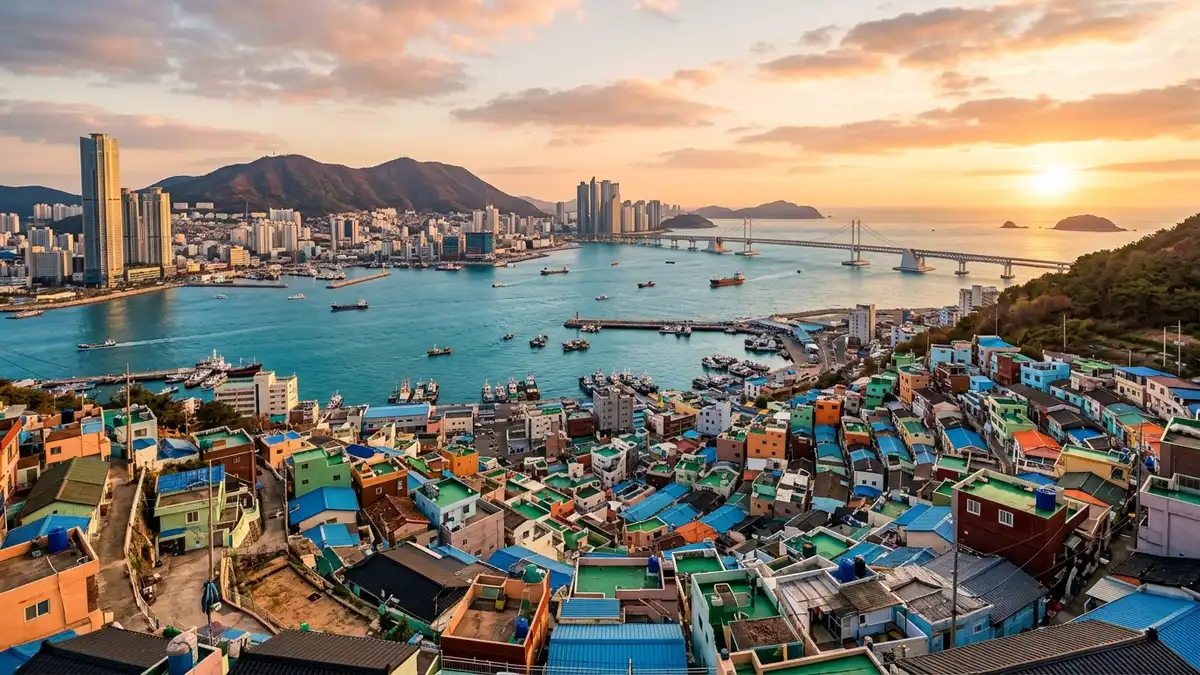
Busan is the kind of city that surprises people who expect Seoul to be the whole story of South Korea. It's the country's second-largest city, but it carries itself with a completely different energy — saltier, more relaxed, deeply tied to the sea. Haeundae Beach is famous for good reason, a long stretch of golden sand backed by a glittering skyline, and Gwangalli Beach offers a slightly more local feel with its iconic bridge views at night. The Jagalchi Fish Market is an essential stop, a sprawling, wonderfully chaotic celebration of everything the Korean coast produces — you can buy fresh seafood downstairs and have it prepared right there. Gamcheon Culture Village, with its cascading pastel houses climbing the hillside, is one of those places that photographs beautifully but feels even better in person.
For something more contemplative, Haedong Yonggungsa Temple sits dramatically on coastal cliffs overlooking the sea — genuinely one of the most striking Buddhist temples in the country, and worth the trip out of the city center. Busan's food scene beyond the market is equally compelling: milmyeon (wheat noodles in cold broth), dwaeji gukbap (pork and rice soup), and the city's own style of Korean barbecue all deserve your attention.
Getting from Gimhae International Airport into the city is straightforward — the Busan–Gimhae Light Rail Transit connects the airport to the metro network, making the city center easily accessible without needing a taxi.
Timing-wise, July and August bring peak summer crowds to the beaches, and December through January sees another surge around the holiday season — fares and accommodation both climb during these windows. Spring and autumn offer a genuinely lovely middle ground: milder temperatures, fewer crowds, and the kind of light that makes coastal cities look their absolute best.