


Route Briefing: Singapore to Kyoto
At just two and a half hours in the air, Singapore to Kyoto is one of those routes that feels almost too easy for the reward waiting at the other end. You board in the tropics and step off into one of the most quietly magnificent cities on earth — a place where a thousand years of Japanese culture has been preserved with extraordinary care. Singapore Airlines and Japan Airlines both serve this corridor with their usual reliability, while Scoot offers a budget-friendly alternative if you're flexible on timing. Lock in your booking six to ten weeks out and you stand a good chance of landing a roundtrip under $350, which is genuinely exceptional value for what this destination delivers.
Kyoto earns its reputation as Japan's cultural soul without any effort. The city holds over two thousand temples and shrines, and wandering between them rarely feels like a checklist exercise — it feels like genuine discovery. The bamboo groves of Arashiyama, the vermillion torii gates of Fushimi Inari, the lantern-lit lanes of Gion where you might catch a glimpse of a geiko or maiko heading to an evening appointment — these are experiences that stay with you. The food culture is equally serious, rooted in a tradition called kaiseki that turns seasonal ingredients into something close to art, though you'll also eat extraordinarily well from simple tofu dishes and street-side matcha sweets.
Both Osaka Itami and Kansai International airports connect to Kyoto with straightforward rail options, so when you're searching for flights, compare prices across both. The journey into the city is comfortable and well-signposted, making arrival smooth even on your first visit.
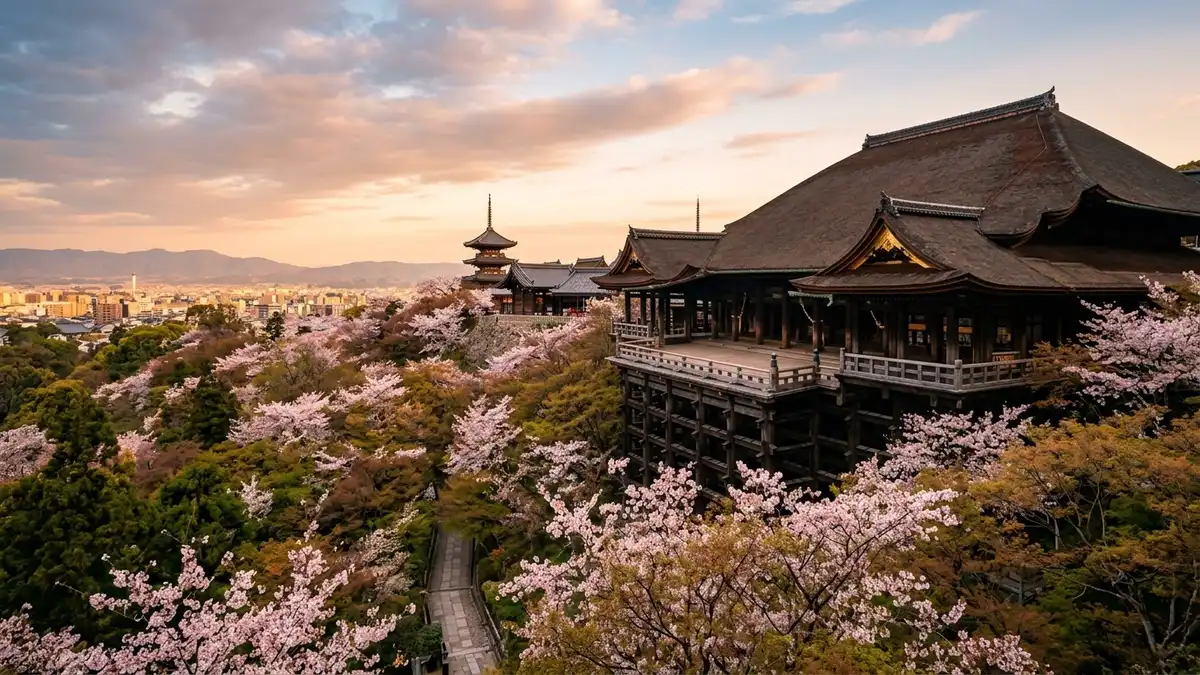
Timing matters enormously here. March through April brings cherry blossom season, when Kyoto transforms into something almost surreal — pale pink canopies over ancient temple gardens. It's peak season for good reason, so expect higher fares and larger crowds. October and November offer a quieter alternative with autumn foliage that many seasoned travellers actually prefer: deep reds and golds against wooden shrines, cooler temperatures, and a slightly more contemplative atmosphere.
The one tip worth holding onto: if you visit during peak blossom or foliage season, build in at least one very early morning walk — ideally before eight — to popular spots like Fushimi Inari or Philosopher's Path. The difference between experiencing these places in near-solitude versus midday crowds is genuinely transformative, and it costs you nothing but an early alarm.