


Route Briefing: Sydney to Busan
If you've been dreaming of a Korean adventure but want to skip the crowds of Seoul and dive straight into something rawer and more coastal, flying Sydney to Busan is one of the smartest moves you can make. At around ten and a half hours with a stop — most commonly connecting through Seoul's Incheon Airport — it's a manageable journey that drops you into one of Asia's most underrated cities. Korean Air and Asiana Airlines are the reliable workhorses on this route, while Jeju Air offers a budget-friendly alternative worth checking. Lock in your booking two to four months ahead and you have a real shot at snagging a roundtrip fare under $700 — a genuine bargain for what awaits.
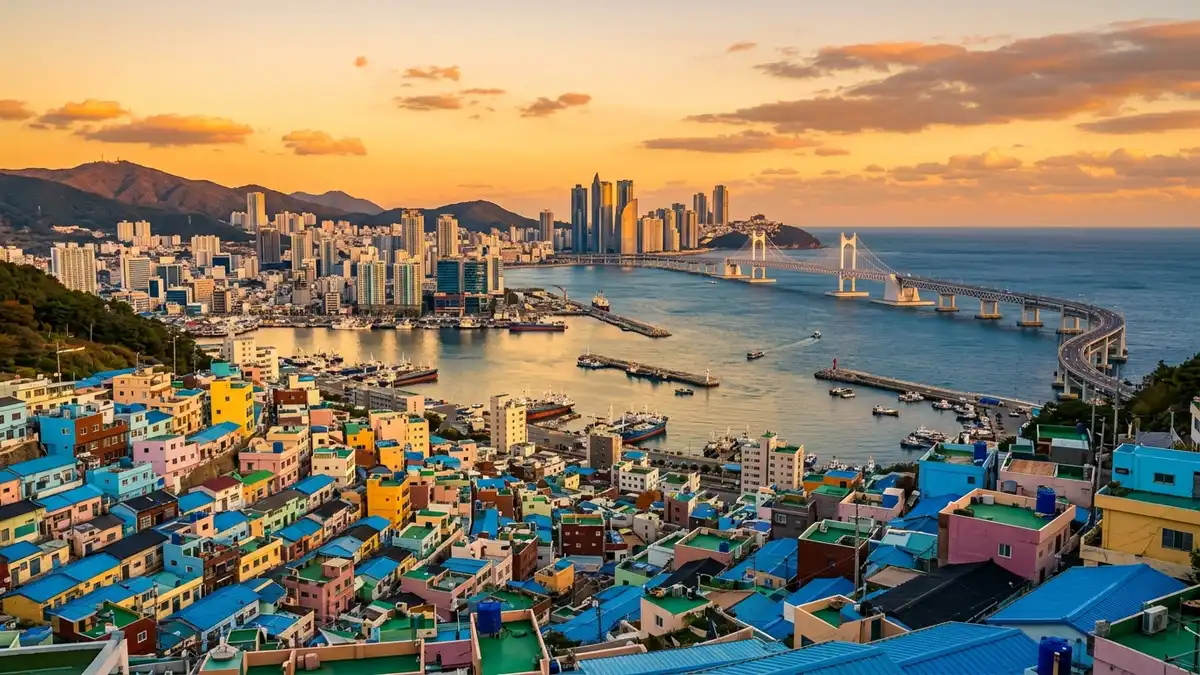
Busan hits differently from the moment you arrive. This is a city built between mountains and sea, where the energy is looser and saltier than the capital. Haeundae Beach is the headline act — a long, buzzing stretch of sand that draws enormous summer crowds — but wander a little further and Gwangalli Beach offers the same sparkling waterfront with a more local feel and a jaw-dropping view of the Gwangan Bridge lit up at night. The Jagalchi Fish Market is an absolute must, a sprawling, chaotic celebration of everything the sea produces, where you can point at your lunch and have it prepared on the spot. For something more contemplative, Haedong Yonggungsa Temple sits dramatically on coastal cliffs and is one of the few Buddhist temples in Korea built right at the ocean's edge — genuinely breathtaking.
Don't overlook Gamcheon Culture Village, a hillside neighbourhood of brightly painted houses that tumbles down toward the port. It's become well-known in recent years but still rewards slow exploration on foot.
From Gimhae International Airport, the city centre is easily accessible by subway — the airport rail link connects directly into Busan's metro system, making it straightforward and affordable to reach your accommodation without the stress of negotiating taxis after a long flight.
Timing matters here. July and August bring peak summer beach season — lively but expensive and crowded. Late January to February around Lunar New Year is another busy and pricier window. For the sweet spot, aim for late spring or autumn, when the weather is mild, the crowds thin out, and accommodation prices soften considerably.
The one tip worth burning into your memory: if your connection routes through Incheon, compare layover times carefully across different itineraries. A longer layover at ICN can actually work in your favour — the airport has excellent facilities and even short transit tours — but a tight connection there is stressful. Give yourself breathing room and the whole journey becomes part of the pleasure.