


Route Briefing: Toronto to Busan
If you've been dreaming about South Korea but want to skip the Seoul crowds and dive straight into something rawer and more coastal, Busan is the answer — and flying there from Toronto makes more sense than you might think. At around 16 hours and 30 minutes with one stop, typically connecting through Seoul's Incheon Airport, it's a long haul but a genuinely rewarding one. Air Canada, Korean Air, and Asiana Airlines all serve this route, and if you catch a fare under $800 roundtrip, you're doing very well. Standard pricing runs $1,100 to $1,400 or more, so booking three to six months ahead is your best move. One practical note: since most connections route through Incheon, compare total travel times carefully — a cheaper itinerary with a long layover can quietly add half a day to your journey.
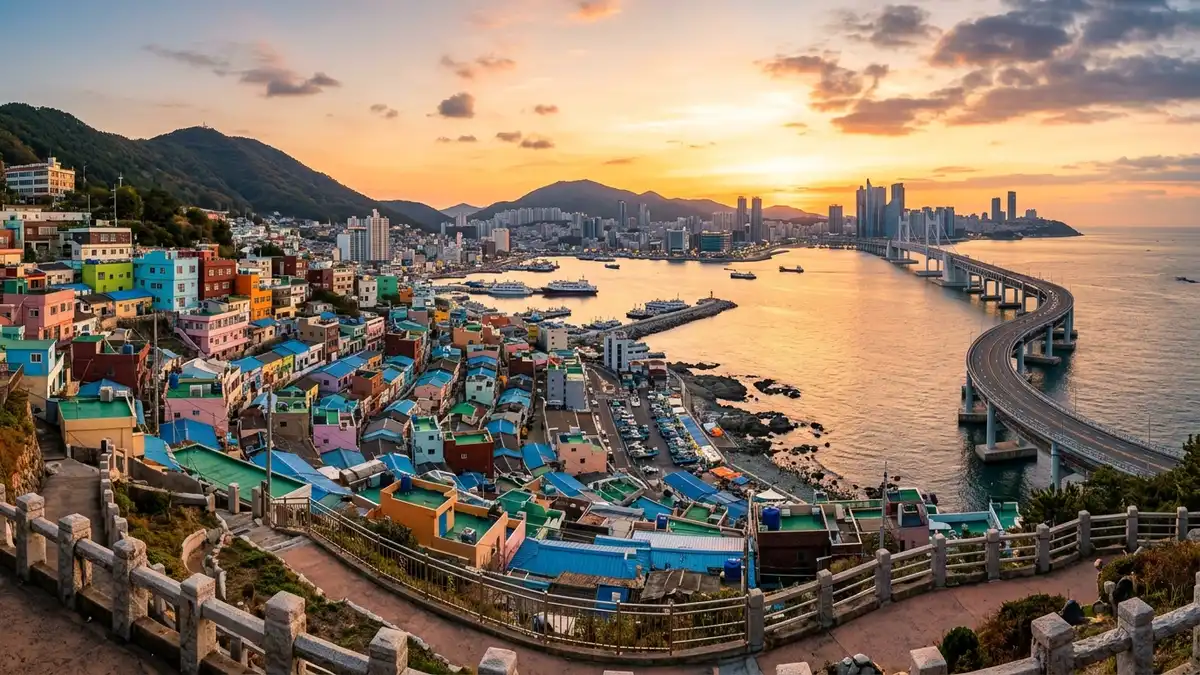
Busan itself hits differently from the moment you arrive. Korea's second-largest city sits where mountains tumble into the sea, and that geography shapes everything — the neighborhoods stacked up hillsides, the beaches tucked between rocky headlands, the fish markets spilling right onto the waterfront. Jagalchi Market is one of the most vivid seafood markets in all of Asia, a sensory overload of fresh catches and haenyeo divers' hauls that you simply have to experience at least once. Haeundae and Gwangalli beaches draw summer crowds for good reason, offering that rare combination of urban energy and genuine coastline. For something quieter, the Gamcheon Culture Village winds up a hillside in pastel colors, while Haedong Yonggungsa Temple sits dramatically on coastal cliffs — one of the few Buddhist temples in Korea built directly by the sea.
From Gimhae International Airport, getting into the city is straightforward and affordable. The airport subway line connects directly to central Busan, making it easy to reach most neighborhoods without the expense of a taxi.
Timing matters here. July and August bring beach season and the famous Busan International Film Festival atmosphere, but also heat, humidity, and peak prices. Late December into early January is another busy window. For the sweet spot — pleasant weather, thinner crowds, and better fares — aim for spring around April and May or autumn in October and November, when the city is comfortable and genuinely beautiful.
The one tip worth burning into your memory: grab a T-money card as soon as you land. It works on buses, the metro, and even some taxis across Korea, and it'll save you the friction of fumbling for cash every time you move around the city. Busan rewards explorers who move freely, and this little card makes that effortless.