


Route Briefing: Washington D.C. to Busan
If you've been dreaming of a Korean adventure but want to skip the Seoul crowds and dive straight into something rawer and more coastal, the Washington D.C. to Busan route is your golden ticket. Yes, it's a long haul — around 16 and a half hours with a connection, typically routing through Seoul's Incheon Airport or occasionally a hub like Tokyo — but Korean Air and Asiana Airlines make that journey genuinely comfortable, and the payoff on the other end is enormous.
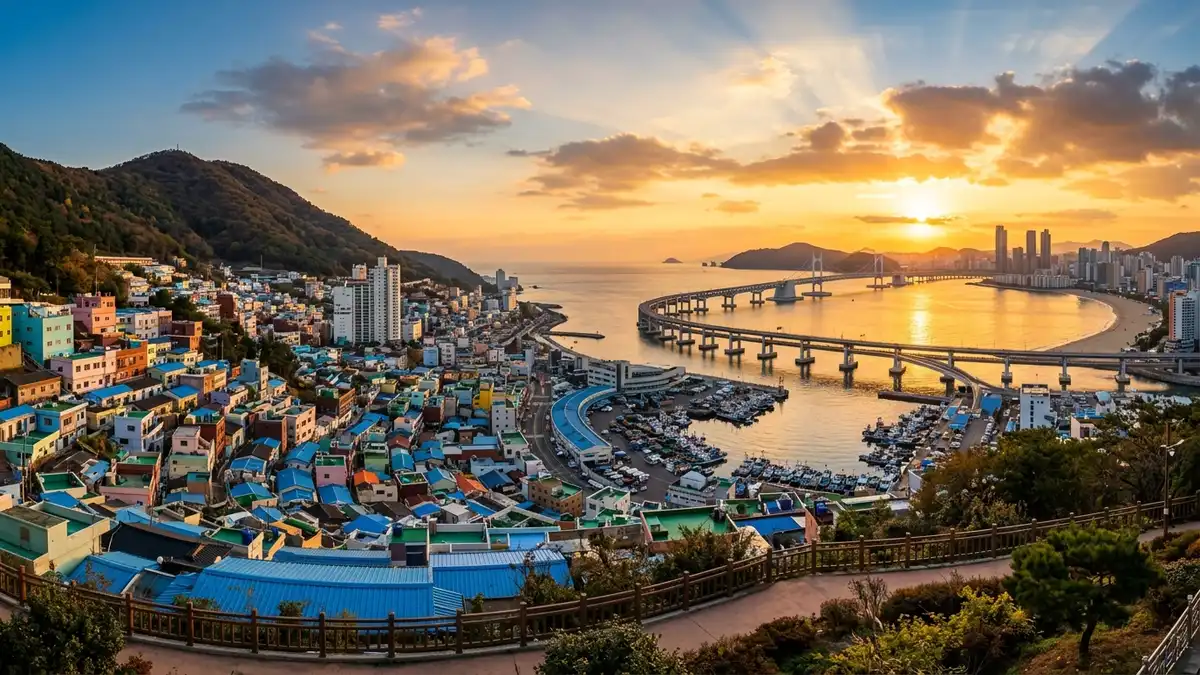
Busan is South Korea's second city, but it carries itself with the confidence of a place that doesn't need to compete with anyone. This is a port city shaped by the sea, and you feel that the moment you arrive. Jagalchi Market, one of the largest seafood markets in Korea, is an absolute must — arrive early in the morning when the haenyeo divers are bringing in fresh catch and the energy is electric. Haeundae Beach draws summer crowds for good reason, offering a lively stretch of coastline backed by a modern skyline that makes for a genuinely striking view. For something more meditative, Haedong Yonggungsa Temple sits dramatically on coastal cliffs overlooking the East Sea, and it's one of the few Buddhist temples in Korea built right at the ocean's edge. The Gamcheon Culture Village, with its cascading pastel-colored houses climbing the hillside, is endlessly photogenic and full of small galleries and cafés worth wandering through.
Getting from Gimhae International Airport into the city is straightforward — the light rail connects the airport to the Busan metro system, making it easy and affordable to reach most neighborhoods without needing a taxi.
Timing matters on this route. Peak season runs June through August when the beaches are buzzing, and again around late December into early January for the holiday period. Both windows mean higher fares and fuller hotels. If you want Busan at its most atmospheric without the premium price tag, consider shoulder seasons — spring brings mild weather and cherry blossoms, while autumn offers cooler temperatures and stunning foliage around the city's hillside temples.
On the fare front, a roundtrip under $700 is genuinely a strong deal for this route, with standard pricing typically landing between $1,000 and $1,400 or more. Book two to four months ahead for the best availability, and if your schedule allows flexibility, flying mid-week rather than on weekends can shave a meaningful amount off the ticket price. Busan rewards the traveler who plans just enough — and then leaves room to get wonderfully lost.