


Route Briefing: Washington D.C. to Kyoto
Few routes reward the journey quite like Washington D.C. to Kyoto. You're trading the monuments of American democracy for the temples of ancient Japan — and roughly 14 and a half hours of flying (with one stop, typically through Tokyo or Seoul) is a small price to pay for that kind of cultural whiplash.
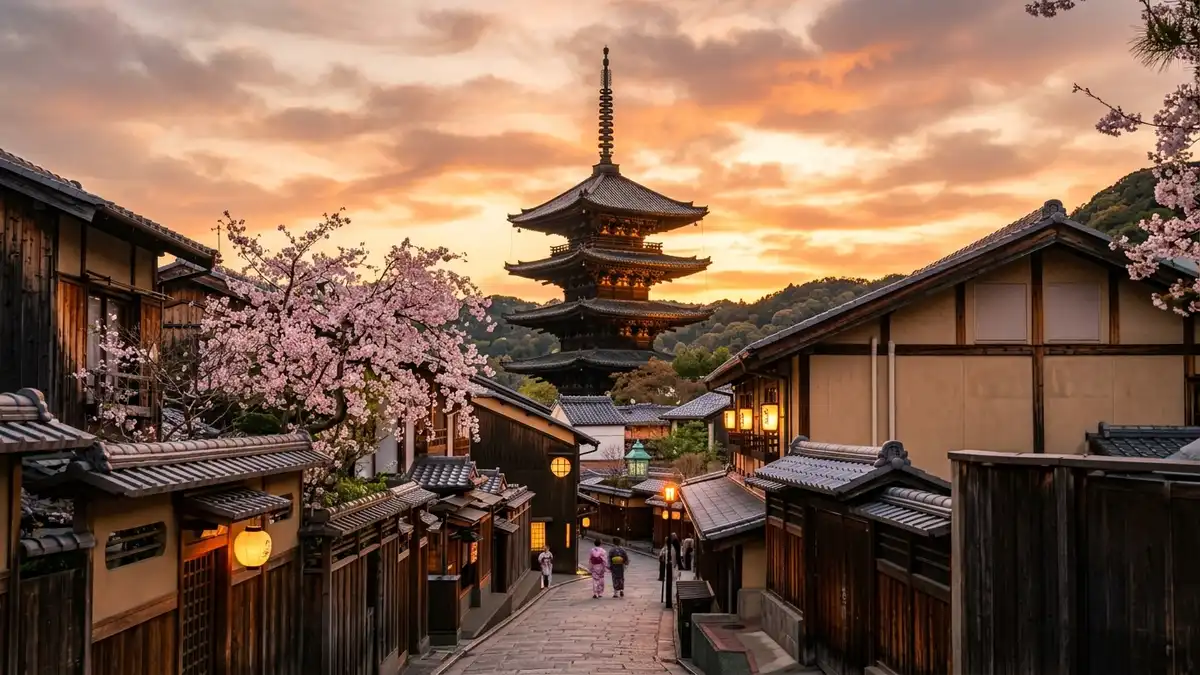
Kyoto is the kind of city that makes you slow down whether you planned to or not. As Japan's former imperial capital, it holds an extraordinary concentration of temples, shrines, and traditional wooden townhouses that survived the twentieth century largely intact. Fushimi Inari Taisha, with its thousands of vermillion torii gates winding up a forested hillside, is genuinely as striking in person as in photographs. The Arashiyama bamboo grove, the geisha district of Gion, the Zen rock gardens of Ryoanji — these aren't tourist traps, they're the real thing, and they exist alongside a city that functions with the quiet efficiency Japan is famous for.
Timing matters enormously on this route. Late March through April is cherry blossom season, and Kyoto transforms into something almost surreal — but so do the airfares. Book three to five months ahead if you're targeting spring, and expect to pay closer to standard fares of $1,100 or more. The same applies to October and November, when fall foliage turns the temple grounds amber and red. If your schedule is flexible, the shoulder months of May and September offer pleasant weather with noticeably thinner crowds and better chances of finding fares under $800 roundtrip, which is the threshold worth hunting for on this route.
ANA, United, and Korean Air are your most reliable carriers. Connecting through Tokyo's Narita or Haneda airports tends to offer the most competitive pricing, and an ANA connection through Tokyo is particularly smooth — the airline's service quality makes a long layover feel like less of a burden.
From Kansai International Airport (KIX), the Haruka limited express train runs directly into central Kyoto in under 80 minutes, making it the most straightforward arrival option. It's comfortable, punctual, and saves you the stress of navigating unfamiliar roads after a transatlantic flight.
One tip worth taking seriously: buy an IC card like an ICOCA at the airport on arrival. It works on trains, subways, and buses throughout the Kansai region and eliminates the need to buy individual tickets at every stop — a small thing that makes daily movement through Kyoto noticeably smoother.